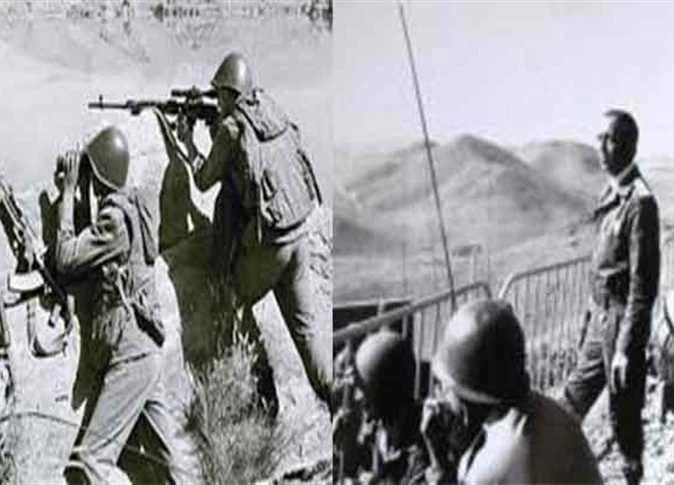
On October 8, 1963, a conflict known as the Sand War erupted between Algeria and Morocco. This clash occurred a year after Algeria gained independence and several months of border skirmishes. The war began in the outskirts of Tindouf and Hassi Beïda, then spread to the Moroccan region of Figuig, before coming to a halt on November 5, 1963, due to successful mediation efforts by the Arab League and the Organization of African Unity.
The roots of the conflict can be traced back to several factors. One major issue was the lack of a border agreement between the two countries. Additionally, the discovery of natural resources, particularly oil, in the disputed region further escalated tensions. The concept of rebuilding a Greater Morocco also played a significant role in the conflict. Following Morocco's independence in 1956, there were ongoing demands for the return of certain territories.
Prior to the Sand War, Morocco's King Hassan II and Algeria's President Ahmed Ben Bella met in a private session. During this meeting, Ben Bella requested that the border issue be postponed until Algeria had completed establishing its constitutional institutions. However, reports emerged in the Moroccan press suggesting that Algerian forces had entered the region of Tarfaya to incite the local population against the king.
In response, King Hassan II and his minister, Mohamed Oufkir, deployed Moroccan forces to regain control of Tinguibou and Hassi Beïda, areas that had been taken away from Morocco by French colonial powers. On October 5, 1963, the war officially began. The conflict ultimately ended with a ceasefire agreement on February 20, 1964.
The dispute had its roots in the period following Morocco's independence in 1956. The country's monarch, King Mohammed V, had claimed sovereignty over certain regions that were subsequently allocated to Algeria during the French colonial era. This claim was based on a map published by Abdelkbir Al-Fassi on July 7, 1956, which depicted a Greater Morocco encompassing territories that dated back to the pre-colonial period.
After Algeria gained independence, Ahmed Ben Bella took over as president, rejecting any Moroccan claims to the disputed territories based on historical and political rights. This stance further fueled tensions between the two nations, ultimately contributing to the outbreak of the Sand War.
The Sand War serves as a significant event in the modern history of Algeria and Morocco, highlighting the complex and often contentious nature of border disputes in the region. The conflict resulted in a significant loss of life and strained relations between the two countries for many years.
Key points
- The Sand War was a conflict between Algeria and Morocco that began on October 8, 1963, and ended with a ceasefire agreement on February 20, 1964.
- The conflict was fueled by several factors, including a lack of border agreement, the discovery of natural resources, and the concept of a Greater Morocco.
- The war resulted in a significant loss of life and strained relations between Algeria and Morocco.