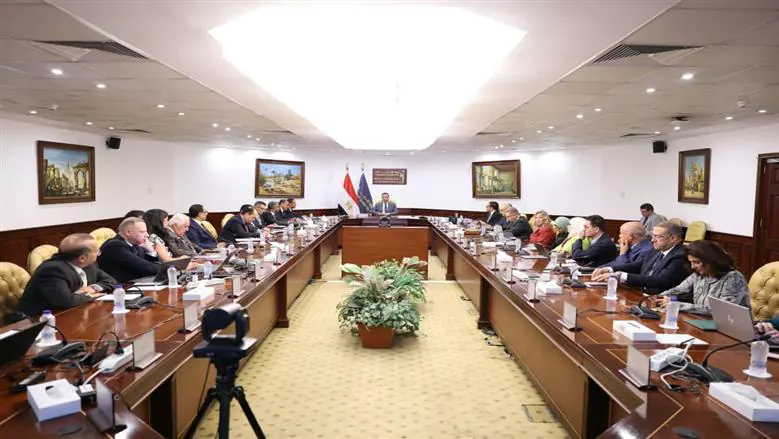
The National Council for Artificial Intelligence and Quantum Computing, led by Communications and Information Technology Minister Eng. Rafeat Hendy, convened to discuss various topics related to enhancing Egypt's capabilities in artificial intelligence and quantum computing. The meeting was attended by council members and experts from various fields. The council reviewed the progress made in implementing the National Artificial Intelligence Strategy, which includes expanding community awareness programs and building digital capacities in this field for different age groups.
Minister Hendy emphasized that the current year has witnessed intensive efforts to implement the National Artificial Intelligence Strategy, including participating in international specialized forums to discuss issues and developments related to artificial intelligence. The council also discussed ways to attract investments in infrastructure supporting artificial intelligence and data centers, and working on several projects in this field. Additionally, the council focused on supporting the localization of technology, providing specialized job opportunities for young people, and attracting global companies to establish and expand centers of excellence in artificial intelligence services.
The council adopted the report on the achievements of the second edition of the National Artificial Intelligence Strategy 2025-2030 during the first half of 2026. The report reviewed progress in the areas of governance, technology and applications, data, infrastructure, ecosystem, and capacity building. Notable achievements include the launch of educational and smart judicial applications, as well as over 40 artificial intelligence applications in the government and banking sectors.
The council also discussed several topics, including presidential directives on governance and responsible use policies for generative artificial intelligence in government agencies. The meeting highlighted Egypt's leading role in the Arab and African regions, both technically and coordinately, in the field of artificial intelligence. The council reviewed the features of the National Quantum Computing Strategy 2027-2030, which aims to build a comprehensive, secure, and sustainable national system for quantum technologies.
The National Quantum Computing Strategy focuses on investing in talent development and scientific research, expanding access to supporting infrastructure, accelerating the development of national applications with impact, and enhancing innovation through academic institutions, government, and industry. The council also discussed several tools for governing artificial intelligence, including a guide for purchasing artificial intelligence systems in government agencies and a policy for the responsible use of generative artificial intelligence in government agencies.
The council reviewed the Egyptian Charter for Responsible Artificial Intelligence for Children, which represents a national policy framework for governing artificial intelligence systems that affect children in Egypt. The charter aims to protect them from risks associated with using these technologies, including harmful content, exploitation, bias, and privacy violations. The council emphasized the importance of maximizing the benefits of artificial intelligence in various sectors.
The National Council for Artificial Intelligence and Quantum Computing will continue to work on implementing the National Artificial Intelligence Strategy and enhancing Egypt's capabilities in artificial intelligence and quantum computing. The council's efforts aim to support the country's development and achieve its goals in the field of artificial intelligence.
Key points
- The National Council for Artificial Intelligence and Quantum Computing adopts the report on the achievements of the National Artificial Intelligence Strategy 2025-2030.
- The council discusses ways to attract investments in infrastructure supporting artificial intelligence and data centers.
- The council reviews the features of the National Quantum Computing Strategy 2027-2030.