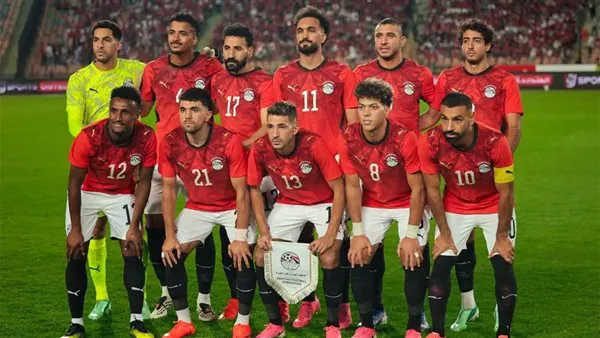
Egypt's national team is embroiled in controversy following the exclusion of star players Mohamed Salah and Mohamed Abdel Monem from the squad to face South Sudan. The decision has sparked debate over the use of artificial turf in the match. While the Egyptian Football Association has allowed local players to train and play on artificial turf, the same rules do not apply to their European-based counterparts.
The issue has drawn attention from European clubs, with Spanish giants Barcelona expressing concerns over the potential risks of playing on artificial turf. The club is reportedly anxious about the participation of their young Egyptian player, Hamza Abdel Karim, in the match. This concern is ironic given that local Egyptian players are expected to play on the same surface without issue.
According to FIFA and CAF regulations, international matches can be played on artificial turf, provided the stadium meets specific standards. The pitch must hold a FIFA Quality Pro certificate, which is the highest level of quality certification for artificial turf. The certification must be renewed annually after passing tests for safety, ball rebound, and shock absorption.
CAF allows the use of artificial turf in qualifying matches and tournaments if the stadiums meet licensing requirements. This is particularly relevant for teams like South Sudan, which may not have access to natural grass stadiums that meet the necessary specifications. Despite this, FIFA recommends natural grass as the preferred option, with artificial turf being an exception rather than the norm.
The use of artificial turf has raised questions about the commitment of CAF to enforcing quality and safety standards. While regulations are in place, concerns remain about the practical implementation of these standards. Egypt's national team is set to face South Sudan on a surface that has been deemed suitable for local players but not for their European-based counterparts.
The controversy highlights the challenges faced by African football in balancing the needs of national teams with the resources available. The use of artificial turf is a contentious issue, with some arguing it is a necessary compromise, while others see it as a risk to player safety. As the debate continues, Egypt's national team must navigate the complexities of preparing for an important match.
The match against South Sudan is crucial for Egypt's campaign, and the team will need to adapt to the artificial turf. With some of their star players excluded, the team will rely on their local talent to secure a positive result. The outcome will not only impact their standings but also shed light on the ongoing debate surrounding artificial turf in African football.
Key points
- Egypt's national team faces controversy over artificial turf use
- Barcelona expresses concerns over player safety on artificial turf
- CAF and FIFA have regulations in place for artificial turf use