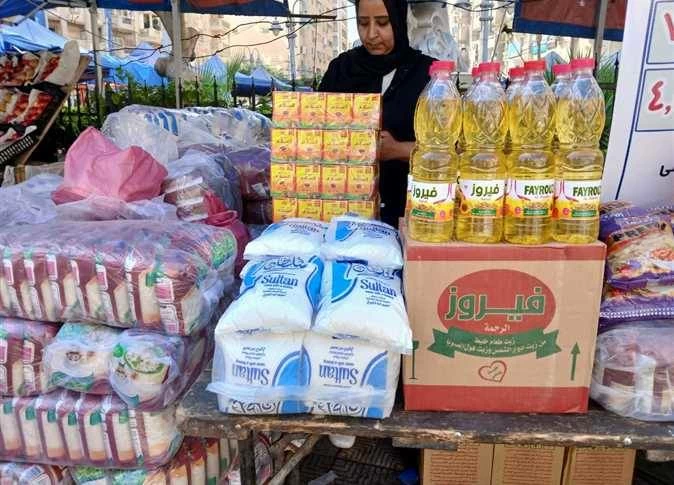
Egypt's Ministry of Supply and Internal Trade has assured citizens that the country has a sufficient strategic reserve of essential goods, with a six-month stockpile of items such as rice, sugar, oil, wheat, frozen meat, and poultry. This announcement was made by Ahmed Kamal, the ministry's spokesperson, during an interview with the local media. The reserve is part of the government's efforts to maintain food security and stabilize prices.
The ministry has been monitoring the markets and supply chains to ensure the availability of goods for citizens. According to Kamal, the government has agreed with the Grain Industry Chamber to provide the required quantities of wheat for the production of free-market bread, maintaining the set prices. The move aims to meet the needs of bakeries and maintain price stability. The ministry also continues to track daily compliance with the set prices and weights.
In a related development, the Ministry of Supply has reported that over 1,000 violations have been recorded in free bakeries since March 2026. These violations include selling bread at prices higher than the official rates or not adhering to the specified weights. Kamal warned that penalties for such offenses include imprisonment, fines, and even the cancellation of business licenses and withdrawal of permits in case of repeated offenses.
The Ministry of Supply has confirmed that there will be no price increases for free-market bread or "fino" bread. The current prices, as set by a ministerial directive in March 2026, remain in effect. The directive specifies that free-market bread weighing 80 grams costs two Egyptian pounds, 60 grams costs one and a half pounds, and 40 grams costs one pound. For "fino" bread, a 50-gram loaf costs two pounds, a 40-gram loaf costs one and a half pounds, and a 30-gram loaf costs one pound.
In terms of wheat, Kamal revealed that the ministry has expanded its sources of imports, previously relying on Russia and Ukraine, but now importing from over 20 countries, including Bulgaria, France, and Romania. This diversification aims to ensure a stable supply of wheat for bread production. Egypt's wheat storage capacity has also increased significantly, from 1.2 million tons in 2014 to over 4.4 million tons currently.
The Ministry of Supply has also increased the number of silos from 39 to 85, enhancing its ability to store and manage wheat supplies. This expansion is part of the government's efforts to improve food security and manage the country's wheat needs more effectively. By increasing storage capacity and diversifying import sources, the ministry aims to maintain a stable supply of essential goods.
The government's efforts to maintain food security and stabilize prices are ongoing. With a six-month strategic reserve of essential goods and a commitment to monitoring markets and supply chains, the Ministry of Supply is working to ensure that citizens have access to affordable food. The ministry's actions aim to balance supply and demand, maintaining price stability and preventing shortages of essential goods.
Key points
- The Egyptian Ministry of Supply has confirmed a six-month strategic reserve of essential goods, including rice, sugar, and oil.
- The ministry has been monitoring markets and supply chains to ensure the availability of goods for citizens.
- Egypt has diversified its wheat imports, now sourcing from over 20 countries, and increased its wheat storage capacity to over 4.4 million tons.