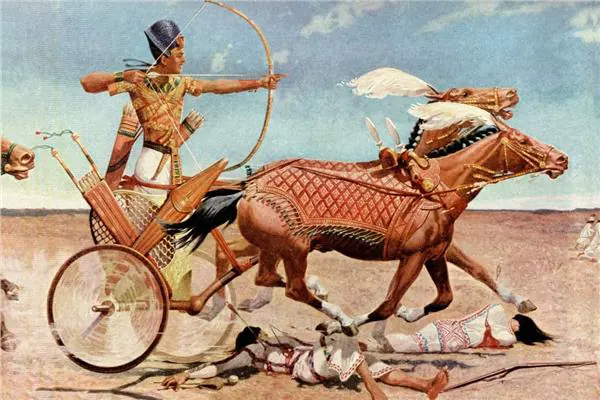
Egypt's rich military history is marked by legendary rulers who have shaped the country's defense and expansion. One such ruler is Thutmose III, who is considered one of the greatest pharaohs of ancient Egypt and a brilliant military commander. His reign was marked by numerous military campaigns that expanded Egypt's influence in the region. Thutmose III's military campaigns took place in various parts of Asia, including Syria, Palestine, and Mesopotamia.
Thutmose III's military campaigns were a crucial aspect of his reign, which saw the Egyptian empire expand its territories. He led a total of 17 military campaigns, which helped establish Egypt as a dominant power in the region. His military strategies and tactics were highly effective, allowing him to conquer and maintain control over a vast territory. The pharaoh's military prowess was celebrated in ancient Egyptian art and literature, with many depictions of him in various temples and monuments.
One of Thutmose III's most notable military campaigns was the Battle of Megiddo, which took place in the region of Canaan. The battle was a significant victory for the Egyptian army, and it marked a turning point in the pharaoh's military campaigns in Asia. Thutmose III's military campaigns were not limited to Asia; he also launched campaigns in Africa, further expanding Egypt's territories. His military conquests helped establish Egypt as a major power in the ancient world.
Thutmose III's legacy extends beyond his military conquests. He was also a skilled administrator and diplomat who maintained Egypt's internal stability and external relations. During his reign, Egypt experienced a period of cultural and economic growth, with many architectural and artistic achievements. The pharaoh's diplomatic efforts helped maintain Egypt's relationships with its neighboring countries, ensuring a period of relative peace and stability.
Thutmose III's impact on Egyptian history is still celebrated today. His military campaigns and conquests helped shape the country's identity and establish its position as a major power in the region. The pharaoh's legacy is a testament to the strength and resilience of the Egyptian people, who have a long history of defending their country and expanding its influence. Thutmose III's story serves as an inspiration to future generations, highlighting the importance of leadership, strategy, and determination.
A statue of Thutmose III, made of pink granite, is a testament to the pharaoh's enduring legacy. The statue, which dates back to the New Kingdom period, depicts the pharaoh in a traditional Egyptian pose, wearing the royal headdress and carrying a staff. The statue is a remarkable example of ancient Egyptian art, showcasing the skill and craftsmanship of the time. It is a reminder of the pharaoh's importance in Egyptian history and his lasting impact on the country's culture and identity.
The story of Thutmose III serves as a reminder of Egypt's rich military history, which spans thousands of years. From ancient times to the present day, Egypt has been shaped by its military leaders and their conquests. Thutmose III's legacy is a powerful symbol of Egyptian strength and resilience, and his impact on the country's history continues to be felt today. As Egypt celebrates its military victories, including the October War, it honors the legacy of leaders like Thutmose III, who have shaped the country's defense and expansion.
Key points
- Thutmose III led 17 military campaigns in Asia and Africa.
- The Battle of Megiddo was one of Thutmose III's most notable military campaigns.
- Thutmose III's legacy extends beyond his military conquests to include his administrative and diplomatic achievements.