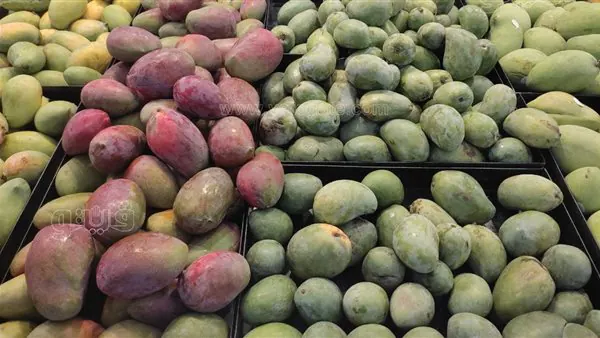
Egypt's mango season, which typically ends in November, is experiencing an unusual extension, with many varieties still available in the market. According to Hatem El-Najib, Deputy Head of the Vegetables and Fruits Division at the Cairo Chamber of Commerce, the continued availability of mangoes is due to the delayed ripening of some crops. This has resulted in an abundance of mangoes in the market, leading to a significant price drop.
The price of mangoes in Egypt has decreased by 25-30% compared to last month, according to El-Najib. This drop is attributed to the high production levels, which have led to a surplus of mangoes in the market. The prices of different mango varieties vary, with some selling for as low as 20-35 Egyptian pounds (EGP) per kilogram. The continued availability of mangoes is a welcome relief for consumers, who can now purchase their favorite fruit at lower prices.
The Egyptian Ministry of Agriculture and Land Reclamation's Climate Change Information Center announced in May that the mango season would be delayed by up to two weeks due to unpredictable weather conditions. The center's head, Dr. Mohamed Ali Fahim, stated that the unusual weather patterns in March, April, and May affected the growth and ripening of mango crops. However, Fahim noted that the impact on mango production was less severe compared to previous seasons.
The most popular mango varieties in Egypt, including Awais, Fons, Baladi, Keit, and Sukari, were not significantly affected by the climate changes. These varieties are widely consumed and are known for their high quality. The continued availability of these varieties has helped to meet consumer demand and stabilize prices.
In the Cairo wholesale market, the prices of different mango varieties vary. The price of Awais mango ranges from 70 to 110 EGP per kilogram, while Zabadia mango sells for 45-55 EGP per kilogram. The price of Baladi mango is between 20-35 EGP per kilogram, and Fuss mango ranges from 70 to 110 EGP per kilogram.
In retail stores and supermarkets, the prices of mangoes are slightly higher. A kilogram of Mabrouka mango costs around 92 EGP, while Fajr Kalan mango sells for 60-70 EGP per kilogram. The price of Keit mango is around 50 EGP per kilogram, and Sukari mango costs around 105 EGP per kilogram.
The extended mango season has provided consumers with a wider range of options and lower prices. The availability of different mango varieties has also helped to support local farmers and stimulate economic growth. As the season comes to a close, consumers are advised to take advantage of the current low prices and stock up on their favorite mango varieties.
Key points
- Egypt's mango season has been extended due to delayed ripening of some crops, resulting in a 30% drop in prices.
- The most popular mango varieties in Egypt, including Awais and Sukari, were not significantly affected by climate changes.
- The prices of mangoes vary depending on the variety and location, with wholesale prices ranging from 20-110 EGP per kilogram.