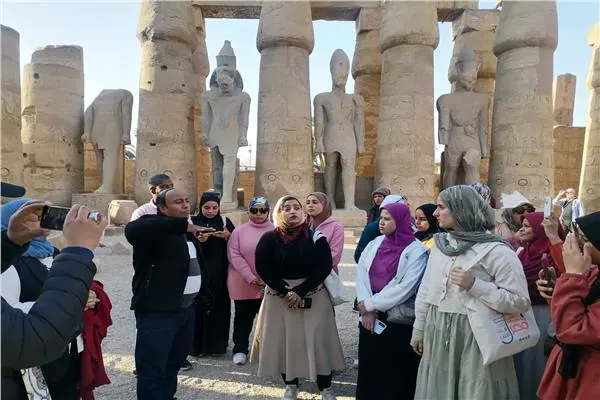
The Egyptian city of Luxor is focusing on extending the stay of tourists, rather than just increasing their numbers. Currently, one tourist spending an extra night in Luxor translates into a hotel room, meals at restaurants, trips or tourist activities, purchases from bazaars, and additional work for guides and drivers. This shift in focus aims to maximize the economic return from existing tourists by encouraging them to stay longer.
To achieve this goal, Luxor is working on diversifying its tourism product and adding new experiences to the traditional program. One example is the hot air balloon ride, which offers tourists a unique view of the West Bank, including the temples of Hatshepsut, the Valley of the Kings and Queens, the Nile, and the fields from the sky. Recent statistics show that there are approximately 11,000 balloon rides annually, carrying around 216,000 tourists, with 23 specialized companies operating in the sector.
According to Mohamed Othman, head of the Cultural Tourism Marketing Committee, increasing the number of balloon rides opens up opportunities to link this product with other types of tourism, such as safari trips. This can be achieved by developing the takeoff area and surrounding services to accommodate more flights, thereby enhancing the diversity of experiences available to tourists in Luxor.
Investment opportunities in Luxor are crucial to creating areas and activities that make tourists less eager to leave. Luxor Governor, Engineer Abdelmotaleb Amr, emphasized that the governorate has promising investment opportunities in the tourism sector, with plans to launch new projects and encourage the private sector to invest in diversifying the tourism product and increasing hotel capacity.
One of these investment opportunities is the development of the Toud Plateau, which offers a unique location and views that allow for the establishment of tourist and entertainment projects. These projects would add a new attraction to the movement within the governorate. Additionally, the governorate is planning to establish an investment hotel to maximize the use of public assets and provide a sustainable economic resource, as well as support hotel capacity.
Governor Amr believes that an extra night's stay is not just a number in hotel occupancy; it also represents new demand for restaurants, bazaars, transportation, guides, trips, and activities. Therefore, increasing the average stay can double the return from existing tourist traffic. The ease of access, with the introduction of the high-speed electric train, may also open up opportunities for new projects, services, and attraction centers.
Luxor already has multiple advantages, including ancient monuments, the Nile, cultural tourism, hot air balloon rides, Nile cruises, and the potential to add other types of tourism. The challenge lies in transforming these elements from separate activities into an integrated experience that gives tourists a new reason to stay an extra day. Ultimately, the goal is to focus not just on how many tourists visit Luxor but also on how many nights they decide to stay.
Key points
- Egypt's Luxor aims to increase tourist stays by diversifying attractions and investments.
- Extending tourist stays can significantly boost the local economy.
- Developing new experiences, such as hot air balloon rides, is crucial to achieving this goal.