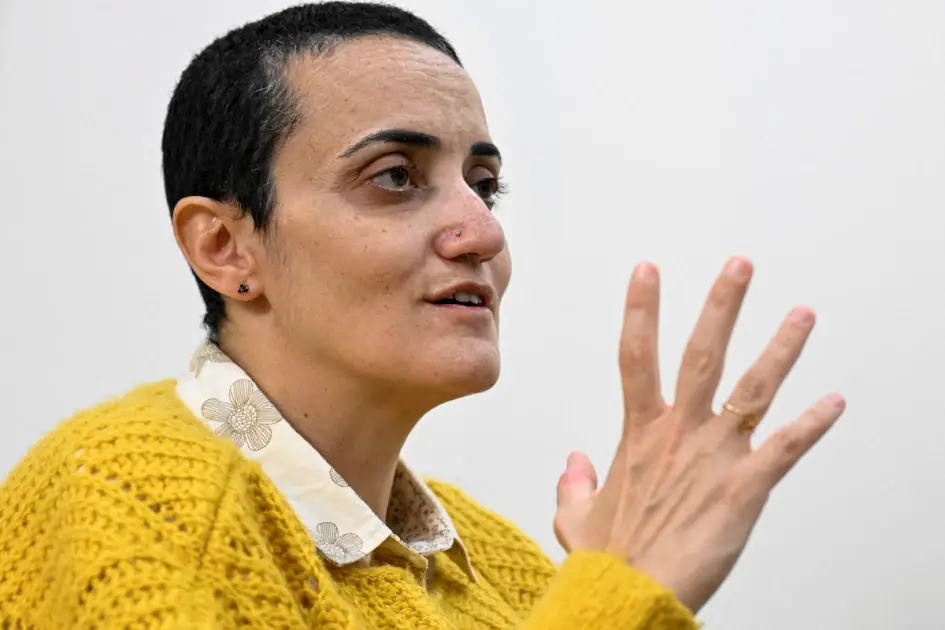
Egyptian journalist Lina Attalah, co-founder and editor-in-chief of Mada Masr, faces a one-year prison sentence in absentia for operating without a licence and publishing false news. Her prosecution has drawn international outcry, including from the European Union and members of the US Congress. Attalah's case is the latest in a series of crackdowns on Egypt's already limited independent media space.
Egypt has detained the entire staff of fact-checking platform Matsadaash and ordered the closure of Mada Masr. Attalah believes these incidents are part of a larger effort to silence the media, which she says is seen as a threat to Egypt's stability. Cairo has long been criticized for its rights record, and nearly all space for dissent has been shuttered over the past decade.
Attalah is one of Egypt's most prominent journalists, and 26 of her colleagues are currently behind bars. Her prosecution has been described as "unprecedented" by 135 media organizations and rights groups, including Amnesty International and Human Rights Watch. With Egypt's last surviving outlets under threat, Attalah warns that "there are very few organisations left with expertise of rigorous reporting."
Last month, a misdemeanours court fined Attalah three million Egyptian pounds, approximately $55,000, for operating the website without a licence. Attalah's defence team described a rushed trial, and she was detained by security personnel after the verdict. She was released hours later, but learned that the court had ordered Mada's shutdown.
An appeal is scheduled for November 25, and Attalah will face a retrial for the 2024 case on Wednesday. She hopes that the charges will be dropped, as "journalists should not be in jail." Attalah and her team of 50 have been unable to do much journalism due to the ongoing cases.
Mada Masr was established in 2013, in the aftermath of Egypt's 2011 uprising, which toppled longtime autocrat Hosni Mubarak. The outlet has survived multiple website blocks and closure orders, amassing a loyal following for its rigorous reporting. Attalah sees Mada's role as crucial, particularly given Cairo's strategic importance in the region.
Attalah believes that "stability can happen by just investing in power and the status quo" is the wrong bet. She argues that a margin of political space for civil and political rights is part of the stability calculus. With Egypt's last surviving free press under threat, Attalah's case has significant implications for the country's media landscape.
Key points
- Egypt's crackdown on free press has resulted in 26 journalists being imprisoned.
- Mada Masr has been a crucial source of reporting and analysis on Egypt.
- Lina Attalah faces a one-year prison sentence in absentia for operating without a licence and publishing false news.