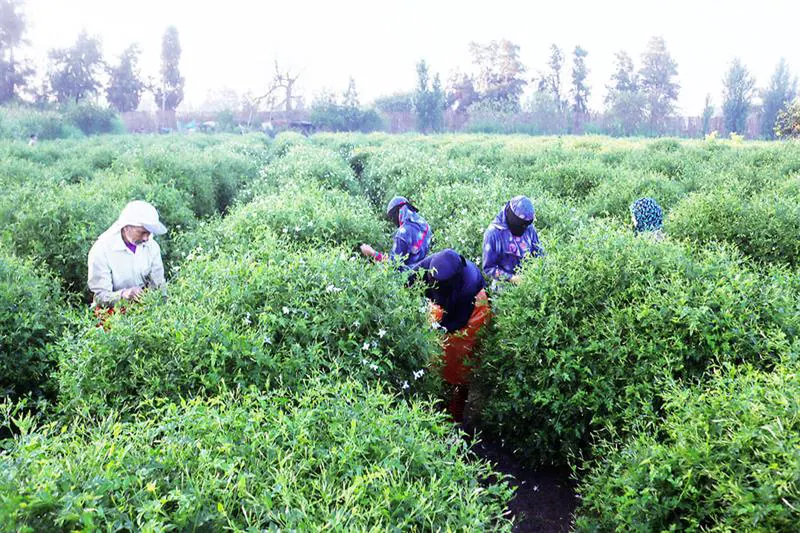
Egyptian jasmine is a prized crop, particularly in the village of Shubra Balula in Gharbiya governorate, where Mohamed Al-Tayeb's tourism company organizes nighttime trips for visitors to experience the beauty and fragrance of the jasmine fields. The trips allow visitors to pick flowers and make decorative necklaces, providing a unique experience. Al-Tayeb's company has been organizing these trips for about four years, taking advantage of the village's reputation for producing around half of the world's supply of jasmine used for perfume.
According to Ayman Eid, owner of a jasmine factory, Shubra Balula remains one of Egypt's leading jasmine-producing regions due to its favorable conditions and long history of cultivation. Jasmine has been grown in the village since the 1950s, and Eid's factory is located next to the land where the flowers are grown, helping to preserve the oils in the jasmine flowers. The proximity of the factories to the fields allows for quick collection and processing, which can significantly impact the amount of oil extracted and the income generated.
The jasmine industry in Shubra Balula relies heavily on labor, with around 80 percent of the land planted with jasmine and most of the village's residents working in the fields and factories. However, the pay for pickers is based on weight, with workers receiving LE80 per kilogram and landowners getting LE40. Ayman Eid explained that a feddan of land can produce around 50 kg of jasmine per day, earning the landowner around LE2,000 per day over six months, but pickers may only earn LE320 per day, barely covering basic needs.
Despite the industry's importance, laborers face significant challenges, including low wages and tough working conditions. Nevine Eid, a researcher at the Medicinal and Aromatic Plants Department, emphasized that jasmine pickers are paid strictly by weight, which can result in very low earnings. The demanding working conditions, including nighttime work with flashlights and handling delicate flowers, mean that workers earn less than those harvesting other crops, despite working longer hours.
The low wages and tough conditions affect labor availability, causing younger workers to avoid jasmine picking and contributing to a broader labor shortage in the sector. As a result, some pickers may resort to adding water to the collected flowers to boost their earnings, which can compromise the quality of the final product. Nevine Eid stressed that fairer prices should be offered to landowners to enable them to raise pickers' wages and improve working conditions.
The Egyptian jasmine industry faces significant structural challenges that need to be addressed to ensure its long-term sustainability. According to Nevine Eid, increasing wages for jasmine pickers is one of the biggest problems facing the industry today. The industry's reliance on low-paid labor and the privileges of major factory owners contribute to the low margins for small factory owners and workers.
The global demand for Egyptian jasmine continues to drive the industry, with luxury perfumes, cosmetics, and pharmaceuticals using the extracted aromatic oils. However, the benefits of this demand do not trickle down to the pickers, who face significant challenges in their daily work. To address these challenges, experts recommend fairer prices for landowners and improved working conditions for laborers, ensuring that the quality of the final jasmine paste begins in the field.
Key points
- Egyptian jasmine producers face significant challenges in competing globally due to low wages and tough working conditions for laborers.
- The industry's reliance on low-paid labor and the privileges of major factory owners contribute to the low margins for small factory owners and workers.
- Fairer prices and improved working conditions are necessary to ensure the long-term sustainability of the Egyptian jasmine industry.