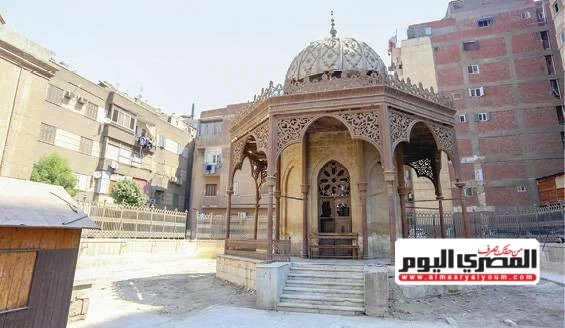
The Suleiman Pasha mausoleum, a historic site in Cairo's Old Egypt area, has been closed to visitors for nearly a year, awaiting restoration work. Despite its significance as the final resting place of Suleiman Pasha al-Faransawi, a prominent figure in modern Egyptian history, the site shows signs of neglect and deterioration. The mausoleum, which dates back to the 19th century, is a notable example of Egyptian architecture with European influences.
Suleiman Pasha al-Faransawi, born Octave Joseph Antoine Seyf in 1788 in Lyon, France, played a crucial role in modernizing the Egyptian military under Muhammad Ali Pasha. He was entrusted with training a nucleus of Egyptian forces in Aswan and later became a key military leader in Egypt during the 19th century. After converting to Islam and adopting the name Suleiman, he rose through the military ranks to become the head of the Jihad, equivalent to the modern-day minister of war.
The mausoleum, which was built to honor Suleiman Pasha, showcases a unique blend of Egyptian and European architectural styles. The site features a dome and a beautifully crafted metalwork, reflecting the cultural exchange that occurred during the 19th century. However, the mausoleum has suffered from years of neglect, with some of its metal elements damaged or destroyed.
A recent visit to the site revealed that a team of officials from the Egyptian Ministry of Antiquities and a cleaning company had inspected the mausoleum and taken photographs. The site's guardian, Faraj Allah Faraj Kamal, stated that the authorities were planning to undertake restoration work, but no specific timeline had been announced. He also mentioned that some restoration work had been done in the past, but it was incomplete.
Tamer El-Monshawy, an archaeological researcher and expert on funerary heritage, emphasized the importance of preserving the Suleiman Pasha mausoleum. He noted that the site was not only a historical landmark but also a testament to the cultural and architectural heritage of Egypt during the 19th century. El-Monshawy called for a comprehensive restoration plan that would address the site's structural and aesthetic needs.
The mausoleum is not the only remaining monument associated with Suleiman Pasha. His statue, which was previously located in a Cairo square, is now housed in the Egyptian Military Museum. Additionally, the gate to his palace, built in 1858, is still standing in the courtyard of a school in Cairo's Maadi district. These sites, along with the mausoleum, provide a glimpse into the life and legacy of Suleiman Pasha.
The restoration of the Suleiman Pasha mausoleum is seen as a crucial step in preserving Egypt's cultural heritage. Once restored, the site could become a popular tourist destination, offering insights into the country's rich history and architectural heritage. The mausoleum's reopening would also serve as a tribute to Suleiman Pasha, a prominent figure in modern Egyptian history.
Key points
- The Suleiman Pasha mausoleum in Cairo's Old Egypt area has been closed for nearly a year, awaiting restoration work.
- The mausoleum is a significant historical site, reflecting the cultural and architectural heritage of Egypt during the 19th century.
- The restoration of the mausoleum is crucial in preserving Egypt's cultural heritage and could make it a popular tourist destination.