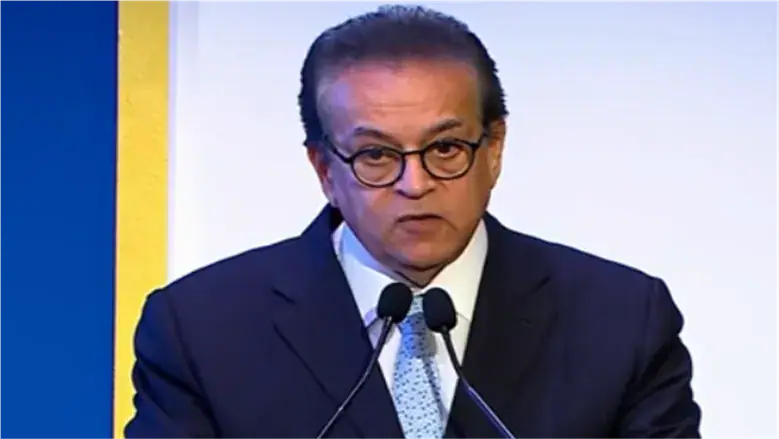
Egypt's Minister of Health and Population, Dr. Khaled Abdel Ghaffar, has announced that the country's healthcare sector has witnessed a substantial increase in government spending, rising from 42 billion Egyptian pounds in 2014 to nearly 2 trillion Egyptian pounds over the past 12 years. This represents a 12-fold increase, highlighting the government's commitment to improving the sector. The minister made this announcement during the third medical conference of the College of Medicine at the Armed Forces, attended by President Abdel Fattah El-Sisi.
The Egyptian government has faced significant health challenges since 2014, including a high burden of disease, unequal distribution of healthcare services, rapid population growth, and inadequate infrastructure. To address these issues, the government has implemented national plans to develop hospitals, medical units, and centers across various governorates. These efforts have led to notable improvements in the healthcare sector, with a focus on enhancing the quality and accessibility of services.
One of the key initiatives launched by the government is the presidential initiative to eliminate hepatitis C virus (HCV). The initiative has made significant progress, with over 62 million citizens screened, and nearly 4 million infected individuals detected and treated. This has contributed to a substantial decline in HCV-related deaths and earned Egypt the "gold certificate" from the World Health Organization in 2023.
The government has also invested heavily in developing healthcare infrastructure, with over 1309 projects implemented at a cost of more than 403 billion Egyptian pounds. These projects have added 20,000 beds, 1500 incubators, and 1900 kidney dialysis machines to the healthcare system. Furthermore, the number of Ministry of Health hospitals has increased from 495 to 554.
The government has also expanded the comprehensive health insurance system, which was initially launched in six governorates. The plan is to extend the system to more governorates, increasing the number of beneficiaries to over 25 million citizens. This move aims to provide universal healthcare coverage and improve access to quality healthcare services.
In addition to infrastructure development and insurance expansion, the government has focused on improving medical education and training. The number of medical colleges in Egypt has grown from 18 in 2014 to an expected 70 by 2027. The annual number of medical graduates has also increased from 6,000 to 27,000. The government emphasizes the importance of developing training programs, promoting continuous medical education, and implementing a law requiring doctors to obtain a license to practice.
The ongoing efforts to improve Egypt's healthcare sector have yielded positive results, including a decline in mortality rates from hepatitis C and other chronic diseases. The sector continues to evolve, with a focus on enhancing the quality of services, increasing access, and promoting public health initiatives. Key initiatives, such as the presidential health initiatives, have benefited around 95 million citizens, providing nearly 303 million healthcare services since their launch in 2018.
Key points
- The Egyptian government has invested 2 trillion Egyptian pounds in the healthcare sector over the past 12 years.
- The presidential initiative to eliminate hepatitis C virus has screened over 62 million citizens and treated nearly 4 million infected individuals.
- The government aims to increase the number of beneficiaries of the comprehensive health insurance system to over 25 million citizens.