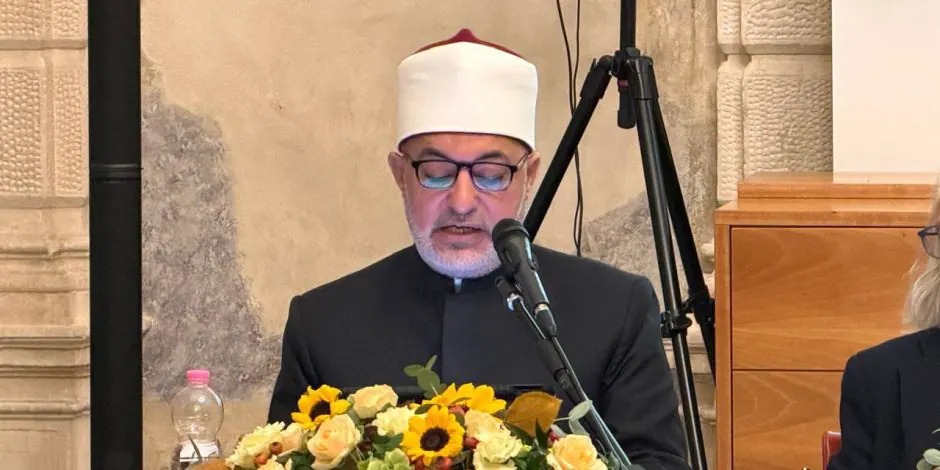
Dr. Nazir Ayad, Egypt's Grand Mufti and head of the General Secretariat for Islamic Institutions and Fatwa Houses, delivered a keynote address at the First International Conference on Religious Studies in Italy. The conference, titled "Religion and Human Commonalities: Contemporary Approaches in Theology and Religious Studies," was organized by the Mohamed bin Zayed University for Human Sciences in collaboration with the University of Padua and the University of East Piedmont. Ayad emphasized that shared human values are essential in building bridges between different cultures and civilizations.
Ayad highlighted that the concept of shared humanity is not a modern innovation, but rather a fundamental aspect of various religions, including Islam. He stressed that the values of mercy, love, and peace are core teachings of Islamic law and are essential in promoting understanding and cooperation between people of different faiths. Ayad also emphasized that these values must be translated into practical actions to address the challenges facing humanity, including wars and conflicts.
The Grand Mufti warned against attempts to undermine cultural identity and heritage in the name of modernization or globalization. He emphasized that it is essential to preserve cultural and religious identity while engaging with other cultures and civilizations. Ayad also highlighted the importance of critical thinking and intellectual inquiry in understanding religious texts and their application in modern times.
Ayad discussed the challenges of interpreting religious texts in the context of modern society. He noted that some modern approaches to interpreting Islamic texts prioritize historical and social context over the text's literal meaning. While acknowledging the importance of understanding the context, Ayad emphasized that this approach must be balanced with a deep respect for the text's divine origins and its role in guiding human behavior.
The Grand Mufti called for greater collaboration between religious institutions, academic institutions, and civil society organizations to promote shared human values and address the challenges facing humanity. He proposed the establishment of an international committee of religious leaders to engage with policymakers and promote peace and understanding. Ayad also emphasized the need for more effective action to address the root causes of conflicts and promote sustainable peace.
Ayad concluded his address by expressing his hope that the conference would lead to concrete initiatives and recommendations to promote tolerance, coexistence, and human dignity. He emphasized that addressing the challenges facing humanity requires a renewed commitment to shared human values such as mercy, love, and peace. The conference brought together scholars and experts from around the world to discuss the role of religion in promoting human commonalities and addressing the challenges of the modern world.
The conference was seen as an opportunity for scholars and experts to engage in dialogue and explore ways to promote greater understanding and cooperation between people of different faiths. The event was also seen as a testament to the growing recognition of the importance of interfaith dialogue and cooperation in promoting peace and understanding in a rapidly changing world.
Key points
- The Grand Mufti emphasized the importance of shared human values such as mercy, love, and peace in promoting interfaith dialogue and cooperation.
- Ayad proposed the establishment of an international committee of religious leaders to engage with policymakers and promote peace and understanding.
- The conference highlighted the need for greater collaboration between religious institutions, academic institutions, and civil society organizations to promote shared human values and address the challenges facing humanity.