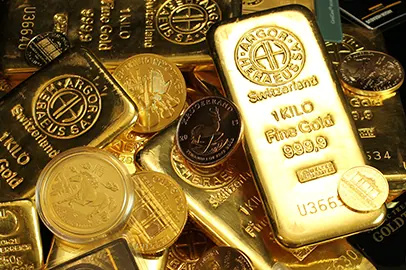
Egypt's gold and gold jewellery exports have declined significantly during the first seven months of 2026. According to Ehab Wassef, Head of the Gold and Precious Metals Division at the Federation of Egyptian Industries, the decline is mainly attributed to stronger domestic demand, regional disruptions affecting air transport, and challenges related to export procedures. The Egyptian market recorded stronger demand for gold purchases, particularly gold jewellery, which absorbed a larger share of available supply and reduced the quantities available for export.
The decline in gold exports is evident in the data from the General Organization for Export and Import Control, which shows that Egypt's gold and gold jewellery exports fell to around $2.4bn during the January-July period, compared with $4.3bn during the same period in 2025. This represents a decline of 44%. The UAE, Egypt's largest destination for gold and gold jewellery exports, has been significantly affected, with exports standing at around $1.2bn during the January-July period, down from $3.4bn a year earlier, marking a decline of about 65%.
Despite the drop, the UAE remained the leading destination for Egyptian gold exports. However, the decline in exports to the UAE is attributed to disruptions to air traffic linked to the regional war, affecting shipping and export operations and contributing to lower volumes shipped to the Emirati market. Wassef noted that continued foreign trade activity with markets including Canada and Australia helped offset part of the decline in exports to the UAE.
In addition to external factors, Wassef pointed to bureaucratic and procedural challenges facing Egyptian companies seeking to expand in international markets, particularly jewellery manufacturers and exporters. These challenges include difficulties in recovering value-added tax (VAT) and complicated procedures for Egyptian companies participating in international trade fairs, which are an important tool for promoting Egyptian products and opening new markets.
Addressing these obstacles would improve the international competitiveness of Egypt's gold and jewellery sector and strengthen companies' ability to expand exports. Wassef noted that Egyptian gold products have opportunities in several international markets. The sector requires support to overcome the existing challenges and capitalize on the available opportunities.
The decline in gold exports has significant implications for Egypt's economy, which has been working to strengthen its export sector. The gold and jewellery sector is a significant contributor to Egypt's exports, and the decline in exports may affect the country's foreign exchange earnings. The sector requires attention from policymakers to address the existing challenges and support the growth of exports.
The Egyptian government has been working to improve the business environment and support the growth of exports. The training of hospital safety assessors with WHO support and the investment in the New Capital's 'The City' project are examples of initiatives aimed at supporting economic growth. However, the gold and jewellery sector requires specific support to overcome its challenges and capitalize on available opportunities.
Key points
- Egypt's gold exports fell 44% to $2.4bn in the first seven months of 2026.
- The decline in gold exports is attributed to stronger local demand, flight disruptions, and export procedure challenges.
- Addressing bureaucratic and procedural challenges would improve the international competitiveness of Egypt's gold and jewellery sector.