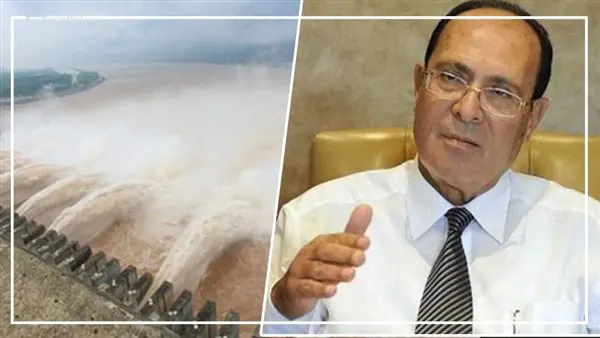
Egypt's former Minister of Water Resources, Mahmoud Abu Zeid, has stated that the Nile's flood in 2026 is expected to be above average. He noted that there are currently no scientific indicators or evidence to suggest that the river's inflow will be lower than usual. Abu Zeid made these comments in a statement to the press, highlighting that the water situation will become clearer in October.
According to Abu Zeid, the Ethiopian side is releasing quantities of water to operate the turbines that generate electricity. He explained that a high flood reduces Ethiopia's ability to store all the incoming water, even if the Grand Ethiopian Renaissance Dam (GERD) reservoir is full. In such cases, excess water must be released, and the turbines must be operated.
The former minister emphasized that the real problem does not arise during years of high flooding but becomes more apparent during periods of low flooding or extended drought. These conditions can exert greater pressure on the flow of water heading to Egypt and Sudan. Abu Zeid's comments come as Egypt and other riparian countries closely monitor the Nile's water levels.
Abu Zeid stressed that a final judgment on the flood situation requires monitoring the inflow rates over the coming period. He noted that October will provide a clearer picture of the flood. The Ministry of Water Resources and Irrigation relies on continuous monitoring of the hydrological situation, forecasts, and mathematical models to manage the water system dynamically.
The former minister highlighted that Egypt's real concern is not related to years of high flooding but rather to years with low inflow or prolonged drought. He warned that a decrease in water inflow from Ethiopia, coupled with Egypt's rising water needs, could pose a significant challenge. This scenario necessitates prior preparation and the development of clear strategies to deal with various water conditions.
Abu Zeid called for clear rules and joint programs to determine how to manage low, medium, and high floods. He argued that the absence of such agreements or programs makes it more difficult to predict water flows and plan for the long term, especially during extended droughts. Effective water management requires proactive measures, particularly given Egypt's increasing water needs.
Years of high flooding provide downstream countries with more room to manage water resources, while drought periods impose greater pressure on water distribution. Abu Zeid emphasized that preparedness for these scenarios must be ongoing, especially as Egypt's water needs grow and food production and basic citizen needs become increasingly tied to water security.
Key points
- Egypt's former Minister of Water Resources warns of extended drought risks.
- The Nile's flood in 2026 is expected to be above average.
- Clear rules and joint programs are needed to manage the Nile's water resources.