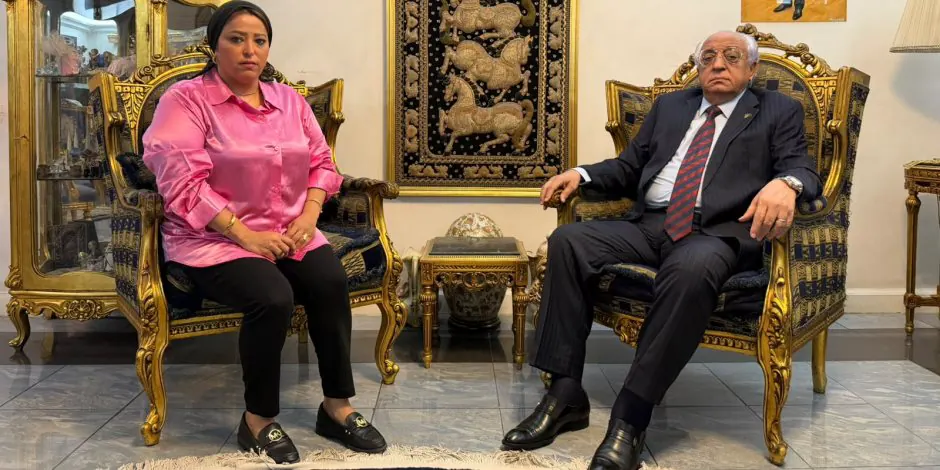
In a recent interview with Sawt Al-Umma, Egypt's former Interior Minister, Mohamed Ibrahim, expressed concerns about the potential return of the Muslim Brotherhood. He warned that the group's approach would be more violent than in 2011. Ibrahim emphasized that the Egyptian people are resilient and will not forget the blood of the martyrs. He also highlighted the importance of coordination among state institutions as the primary line of defense.
Ibrahim provided an in-depth analysis of the events leading up to the Muslim Brotherhood's rise to power in 2011. He explained that the group had been building its presence in society for years, participating in unions, associations, and parliamentary work. This allowed them to establish a base that enabled them to compete for power after 2011. However, Ibrahim noted that the Brotherhood's transition from influencing politics to managing the state marked a significant turning point.
The former Interior Minister stressed that the Ministry of Interior played a crucial role in this context, not only due to its security functions but also because of its integrated nature, comprising various sectors and specialties working together. Ibrahim revealed that he faced resistance from the Brotherhood, particularly from President Mohamed Morsi and the Guidance Office, over appointments and promotions within the ministry.
Ibrahim discussed the significance of the Ministry of Interior's unity, stating that it cannot be fragmented. He emphasized that any attempt to influence one sector could impact the entire institution. This, he believes, is closely tied to the overall cohesion of state institutions. Ibrahim argued that the Brotherhood's efforts to influence the Interior Ministry were part of a broader attempt to reshape state institutions.
The former Interior Minister also touched on the crisis surrounding the Public Prosecutor, Abdel Megid Mahmoud. Ibrahim described Mahmoud as a symbol of the state, whose independence was crucial to the Brotherhood's goals. The group sought to replace him with someone more responsive to their demands, which would have allowed them to manipulate case files and avoid accountability.
Ibrahim highlighted the importance of the Public Prosecutor's independence, seeing it as an integral part of the judiciary's autonomy and the preservation of judicial authority. He cited the controversy surrounding the appointment of Talat Abdel Allah as Public Prosecutor in November 2012, which sparked judicial objections and ultimately led to Abdel Megid Mahmoud's return to his position.
Ibrahim attributed the Brotherhood's failure to govern effectively to their inability to transition from a organizational mindset to a state-oriented one. He argued that the group's experience with hierarchical structures and predetermined decision-making processes did not translate to managing a diverse and complex state with multiple institutions and specialties.
Key points
- The Muslim Brotherhood is planning a return with a more violent approach than in 2011.
- The group's inability to govern effectively stemmed from their failure to adapt to a state-oriented mindset.
- The independence of state institutions, including the Interior Ministry and the judiciary, was a crucial aspect of the Brotherhood's failed governance.