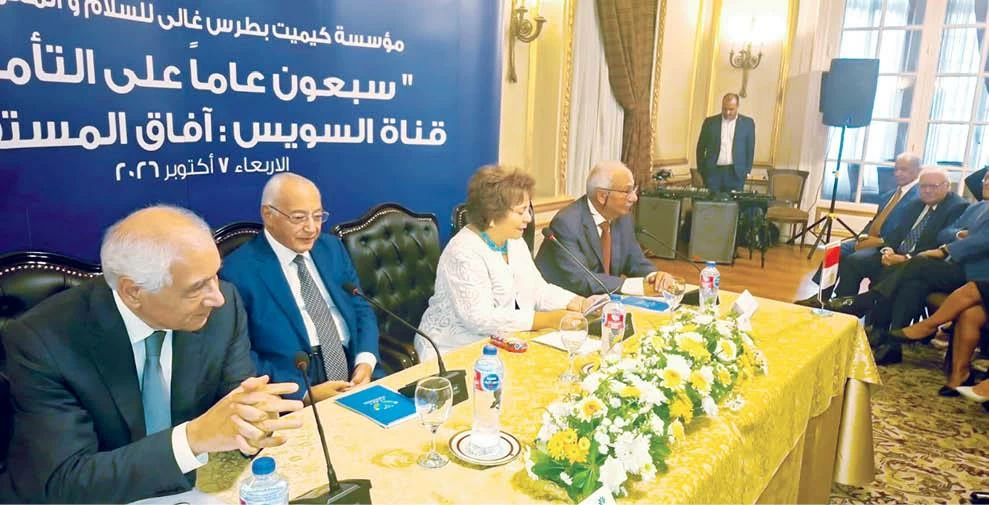
Egypt's former Finance Minister, Ahmed Jalal, expressed concerns about the country's economic situation, particularly regarding the Suez Canal and the Suez Canal Economic Zone. Speaking at a seminar organized by the Kemit Batrus Ghali Forum for Peace and Knowledge, Jalal emphasized that the state's role as an owner and regulator of markets has failed. He highlighted the need for a more efficient and competitive economy.
Jalal noted that the state's involvement in the economy has increased over time, with a current share of 30%, compared to an average of 10% in other countries. He argued that this level of state intervention has led to inefficiencies and a lack of competition. Jalal also criticized the state's role in managing public assets, such as the Suez Canal, which he believes should be managed independently.
The Suez Canal, a vital waterway connecting the Mediterranean Sea to the Red Sea, has been a significant contributor to Egypt's economy. Jalal mentioned that the canal's development has been ongoing since the era of former President Hosni Mubarak. He also referenced the efforts of the Suez Canal Authority, led by Chairman Mohab Mamish, to increase the canal's revenue.
Jalal discussed the challenges facing the Suez Canal Economic Zone, which spans 455 square kilometers and includes industrial areas, ports, and other facilities. He dismissed proposals to transfer the canal's assets to the Central Bank, citing concerns about debt and the state's role in the economy. Jalal emphasized the need for a more nuanced discussion about the state's role in the economy and the importance of creating a competitive business environment.
The former finance minister also touched on the issue of public debt, which he described as a national concern. He argued that the state's role in the economy should focus on policy-making and regulation, rather than direct involvement in economic activities. Jalal suggested that the state should prioritize creating a favorable business environment and promoting competition.
Jalal highlighted the need for Egypt to address issues related to income and wealth distribution. He noted that the country's middle class has faced significant economic challenges in recent years. Jalal recommended that the state focus on creating a more equitable distribution of income and wealth, rather than relying on subsidies and support for specific sectors.
The seminar, which was moderated by Dr. Ali al-Din Hilal, a professor of political science, featured discussions on the history and significance of the Suez Canal, as well as its future prospects. Participants debated the merits of different approaches to managing the canal and the economic zone, and emphasized the need for a more efficient and competitive economy.
Key points
- Egypt's former finance minister criticizes state's role in economy
- State's involvement in economy has led to inefficiencies and lack of competition
- Need for more nuanced discussion about state's role in economy and creating competitive business environment