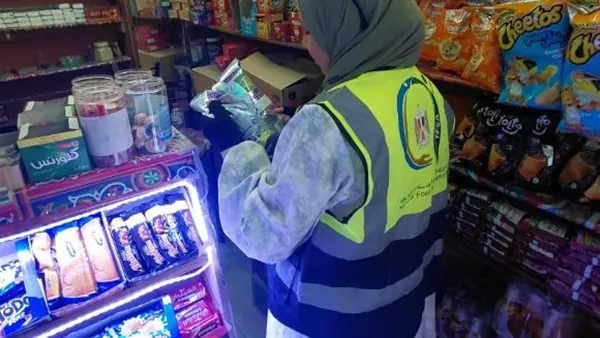
Egypt's National Authority for Food Safety and Control has released its 37th weekly report for 2026, detailing its efforts in monitoring food establishments and markets from September 26 to October 2. The report highlights the authority's inspections of food establishments, export and import activities, and campaigns to seize substandard food products. During this period, the authority conducted 134 inspections of food factories and registered 10 new establishments.
The authority's export and import department reported 3810 food shipments, totaling 156,000 tons, exported by 1340 companies. These shipments included 710 types of food products, such as vegetables, fruits, and processed foods. The top export destinations were Saudi Arabia, Sudan, Italy, the US, and Brazil. The authority also issued 749 export permits for agricultural products, including fruits and vegetables.
In terms of imports, the authority reported 1544 shipments, totaling 120,000 tons, imported by 765 companies. The main imported products were oils, wheat, soybeans, and apples. Indonesia, Ukraine, the US, China, and India were the top exporters to Egypt. The authority also conducted inspections on storage facilities and strategic commodities, seizing 122 shipments of substandard food products.
The authority's campaigns to monitor food safety in various governorates resulted in the seizure of substandard food products and the closure of several food establishments. The authority received 160 complaints from citizens and conducted 1124 inspections on food establishments, resulting in the destruction of substandard food products. Additionally, the authority registered 71 new food products and inspected 363 products.
The authority also conducted inspections on tourist facilities, including restaurants and hotels, and issued temporary permits to 5 food carts. Furthermore, the authority inspected 14 manufacturing facilities producing food-contact materials and registered 934 establishments. The authority's efforts aim to ensure food safety and quality in Egypt.
In a significant discovery, the authority uncovered a non-licensed facility in Beni Suef governorate producing fake black pepper using subsidized flour. The authority also conducted joint campaigns with other agencies to monitor food safety in various governorates. These efforts resulted in the seizure of substandard food products and the closure of several food establishments.
The authority's efforts to enhance food safety and quality are ongoing, with a focus on monitoring food establishments, exports, and imports. The authority's report highlights its commitment to ensuring the safety and quality of food products in Egypt. The authority's inspections and campaigns aim to protect public health and prevent foodborne illnesses.
Key points
- The Egyptian food safety authority seized 156,000 tons of food exports and uncovered food safety violations in various campaigns.
- The authority conducted 1124 inspections on food establishments, resulting in the destruction of substandard food products.
- A non-licensed facility in Beni Suef governorate was found producing fake black pepper using subsidized flour.