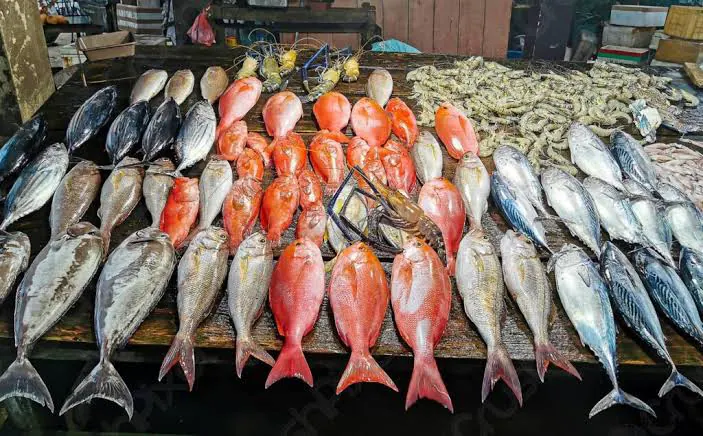
Egypt's fish prices have remained stable on Saturday, October 3, 2026, according to fish traders. The country's aquaculture sector is the main source of fish production, accounting for over 80% to 85% of the total production, which is approximately 1.6 million tons. The sector has been growing rapidly, with the government launching several major projects to boost production.
The Egyptian government has been investing heavily in aquaculture projects, including the development of large fish farming cities such as Berka Gleyon in Kafr El Sheikh, which is one of the largest in the Middle East. The project uses the latest international standards to produce high-quality fish. Additionally, the government has established projects in East Suez Canal in Ismailia, which includes thousands of fish ponds, feed factories, and packaging plants to support the development of Sinai.
The prices of various types of fish in Egypt have remained stable, with the price of Nile tilapia ranging between 85 and 100 pounds, depending on the region. The price of Bori fish is between 175 and 250 pounds, while the price of sea bass ranges between 170 and 270 pounds. The country's fish production has been increasing, with Egypt achieving a self-sufficiency rate of 92% to 93.5% in fish production.
According to the Egyptian Ministry of Agriculture, the country's total fish production is approximately 2.2 million tons per year, with 1,571,000 tons coming from aquaculture and 456,000 tons from natural fisheries. The per capita consumption of fish in Egypt is around 18 kilograms per year, which is slightly lower than the global average of 20 kilograms per year.
The prices of frozen fish in Egypt vary, with the price of frozen pasta ranging between 30 and 60 pounds per kilogram. The price of frozen sea bass ranges between 350 and 475 pounds per kilogram. The country's fish market is also witnessing a surge in the prices of other types of fish, including shrimp, which ranges between 250 and 1,000 pounds per kilogram.
The Egyptian government has been working to increase the country's fish production through various initiatives, including the development of new fish farms and the introduction of new fish species. The government aims to increase the country's fish production to meet the growing demand for fish in the local market.
The stability in fish prices is expected to continue in the coming days, with the country's fish production expected to meet the growing demand for fish in the local market. The Egyptian fish market is also expected to witness an increase in the production of high-value fish species, including sea bass and sea bream.
Key points
- Egypt's aquaculture sector produces over 80% of the country's total fish production.
- The country's fish production is approximately 2.2 million tons per year.
- Egypt has achieved a self-sufficiency rate of 92% to 93.5% in fish production.