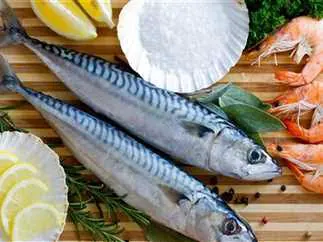
Egypt has ranked first in Africa and sixth globally in the aquaculture sector, thanks to large national projects such as the Berka Gleyon project in Kafr El Sheikh, one of the largest fish cities in the Middle East. This project and others like it, including the East Suez Canal project in Ismailia and the Dibaa project in Port Said, have greatly contributed to the country's fish production. These projects utilize the latest global standards and technologies.
The country's fish production reached about 2.2 million tons annually, with 1,571,000 tons coming from aquaculture and 456,000 tons from natural fisheries. According to Dr. Salah Masilhi, head of the General Authority for Fisheries Development, these numbers indicate a significant increase in fish production in Egypt. The government's efforts to develop the aquaculture sector have led to an increase in fish production and a reduction in imports.
On Friday, October 2, 2026, the prices of various types of fish in Egypt remained stable. The price of tilapia fish ranged between 85 and 100 pounds, depending on the region. Meanwhile, the price of Bouri fish ranged between 175 and 250 pounds. These prices were reported by fish traders and are expected to vary depending on the region and market.
In the Obour market, wholesale prices for various types of fish were reported as follows: tilapia ranged between 59 and 64 pounds per kilo, Bouri fish between 100 and 240 pounds, and carp between 50 and 180 pounds. The prices of other types of fish, such as snakes and cuttlefish, also varied. These prices are according to the official website of the Obour market.
Frozen fish prices in Egypt also varied, with the price of frozen pasta ranging between 30 and 60 pounds per kilo. The price of frozen Danish fish ranged between 350 and 475 pounds per kilo. The average annual consumption of fish per Egyptian citizen is about 18 kilograms, which is slightly lower than the global average of 20 kilograms.
The price of some types of fish, such as shrimp, ranged between 250 and 1000 pounds per kilo. Aquaculture is the main source of fish production in Egypt, accounting for about 80-85% of the country's total fish production. The remaining 15-20% comes from natural sources, including the Nile River, the Mediterranean Sea, the Red Sea, and Egyptian lakes.
Egypt has made significant progress in achieving self-sufficiency in fish production, with a rate of 92-93.5%. This has been achieved through the expansion of aquaculture projects and the development of the fisheries sector. The government's efforts to improve fish production and reduce imports have contributed to the stability of fish prices in the local market.
Key points
- Egypt's fish production reached 2.2 million tons annually.
- The country's aquaculture sector accounts for 80-85% of total fish production.
- Egypt has achieved a self-sufficiency rate of 92-93.5% in fish production.