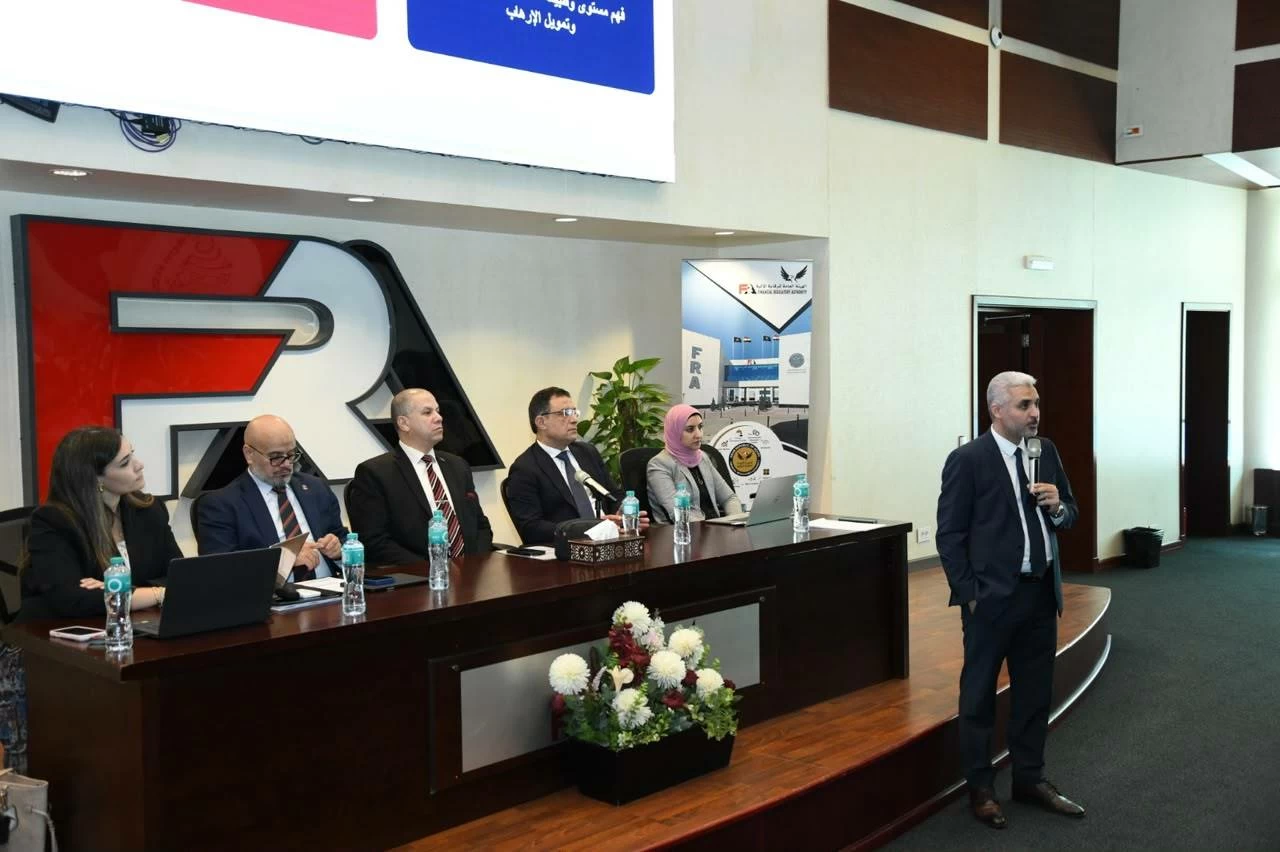
The Egyptian Financial Supervisory Authority has taken a new step in its fight against money laundering and terrorism financing. The authority hosted a meeting with representatives from companies operating in non-banking financial activities. The meeting aimed to enhance efforts to counter the risks of money laundering and early detection. Dr. Islam Azzam, head of the Financial Supervisory Authority, emphasized the importance of applying the updated version of "customer due diligence procedures" issued by the Anti-Money Laundering and Terrorism Financing Unit.
The meeting discussed the risks of money laundering and terrorism financing. The representatives of the unit presented a detailed overview of the risks and the importance of applying targeted financial sanctions. These sanctions include asset freezing and blocking to prevent the availability of funds or assets for specific individuals or entities. The meeting also touched on customer due diligence procedures, verification of identity, and indicators for high-risk cases.
The Financial Supervisory Authority has issued a circular requiring all institutions in the capital market, insurance, and non-banking financing sectors to apply the updated version of "customer due diligence procedures." The procedures were updated to enhance the efficiency and effectiveness of anti-money laundering and terrorism financing controls. The authority also emphasized the importance of having a clear policy and rules for customer acceptance and ongoing due diligence.
The meeting highlighted the importance of having data, information, and documents on the procedures taken by companies to deal with risks and suspicious transactions. The representatives of the unit stressed the need for continuous review of the rules to measure results and ensure the efficiency of the systems applied internally. The Financial Supervisory Authority also emphasized the importance of developing internal practices in line with the nature of risks associated with each activity.
Hamdy Badwi, assistant head of the Financial Supervisory Authority, stated that the meeting reflects the authority's and companies' commitment to tightening compliance with anti-money laundering and terrorism financing systems. He emphasized the need for developing regulatory frameworks and risk management in the non-banking financial sector to keep pace with international and local standards.
The Financial Supervisory Authority has a regulatory framework for non-banking financial activities that includes strict provisions, including Decision No. 161 of 2024 on regulatory controls for combating money laundering and terrorism financing. The decision requires those subject to its provisions to have a clear policy and rules for risk assessment. The authority also aims to raise awareness about the provisions of the frameworks and laws through training and transferring expertise to state agencies.
The Egyptian Financial Supervisory Authority is one of the state agencies responsible for enforcing legislative and regulatory frameworks to combat money laundering and terrorism financing. The authority works to generalize these frameworks to various economic sectors and raise awareness about their provisions. The authority's efforts aim to support the national economy and enhance the quality of services provided by the non-banking financial sector.
Key points
- The Egyptian Financial Supervisory Authority has taken new measures to combat money laundering and terrorism financing.