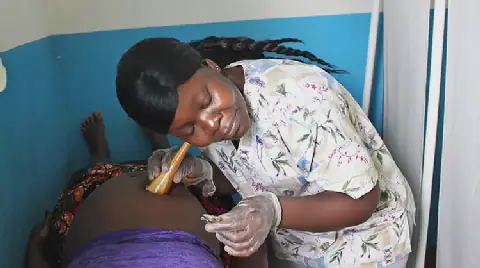
Egypt's Ministry of Health has responded to criticism of its family medicine model, stating that it has been in operation since the 1990s. The model was made mandatory through Law 2 of 2018, which designated it as the gateway to the healthcare system. Patients are required to first visit a family doctor or general practitioner at a primary care unit before being referred to higher-level facilities if needed.
According to the Ministry, the model has shown promising results, with 4.5 million citizens benefiting from the program in six governorates as of April 30, 2026. This represents 6.83% of the target population, including around 16% of low-income individuals whose premiums are covered by the state. The program has provided over 57 million family medicine services through 285 facilities.
The Ministry also addressed criticism that the program has not been successful, citing statistics that suggest otherwise. The Ministry argued that the program's goal is not to provide cheap services, but to offer financial protection through a contributory system that separates healthcare from poverty. This approach is in line with the World Health Organization's definition of universal health coverage.
The Ministry also pointed out that the implementation of family medicine models in other countries has been a gradual process. For example, Germany took decades to develop its system, which was introduced in 1883. Thailand and Turkey also built their systems in stages. The Ministry argued that Egypt's gradual approach is not a sign of failure, but rather a deliberate effort to ensure quality and sustainability.
While the Ministry acknowledged that there is room for improvement, it rejected generalizations and criticism that healthcare workers are neglecting their duties. The Ministry stated that it is working to improve patient satisfaction, with a goal of achieving 90% satisfaction rates and resolving 95% of complaints.
The Ministry's response was welcomed by some, who agree that the family medicine model has the potential to improve healthcare in Egypt. However, others have expressed skepticism, citing concerns about the program's limited scope and the need for further development.
The debate over Egypt's family medicine model is ongoing, with some calling for its expansion to cover all governorates. As the program continues to evolve, it remains to be seen whether it will achieve its goals and provide quality healthcare to all Egyptians.
Key points
- Egypt's family medicine model has been in operation since the 1990s and has shown promising results, with 4.5 million citizens benefiting from the program.
- The program's goal is to provide financial protection through a contributory system that separates healthcare from poverty.
- The implementation of the program is a gradual process, with a focus on quality and sustainability.