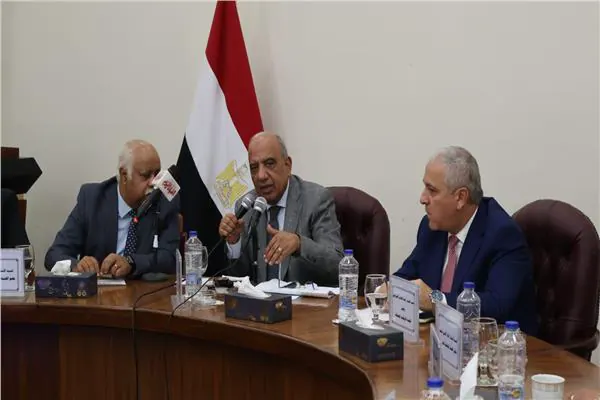
Egypt's Minister of Electricity and Renewable Energy, Dr. Mahmoud Essmat, has stated that the country will not return to load shedding, and that the government is working on scenarios and plans to deal with geopolitical crises in the region. The minister made these comments during a meeting with heads of administration, editors-in-chief of newspapers, and a number of journalists and writers at the National Press Authority. He emphasized that the electricity sector is working to secure and sustain the electrical power supply.
Dr. Essmat noted that the state has given special attention to the energy sector over the past decade, as part of a vision for comprehensive and sustainable development. He stated that treating energy as a national security issue has contributed to the implementation of large projects in the fields of electricity generation, transmission, and distribution, with investments of around 5 trillion pounds. The minister also mentioned that the sector has succeeded in adding generation capacities of over 35,000 megawatts.
The minister highlighted that the sector has changed the operating patterns of production plants and applied quality and economic operation standards, which has contributed to reducing fuel consumption. He stated that fuel consumption per kilowatt-hour has been reduced to less than 170 grams per kilowatt-hour. Dr. Essmat also mentioned that the sector is working to increase the contribution of renewable energy to the energy mix, with plans to add around 4,000 megawatts of solar and wind power capacity over the past two years.
Dr. Essmat emphasized that the national energy strategy aims to increase the contribution of renewable energy to 45% of the energy mix by 2028, from 42% targeted for 2030. He stated that this will help reduce dependence on traditional fuel, alleviate pressure on foreign currency, and reduce carbon emissions. The minister also mentioned that the sector is working to expand the use of energy storage systems using batteries.
The minister highlighted that the sector is working to build a smart, flexible, and sustainable electricity system, with a focus on the role of control centers in managing the unified network and achieving stability. He stated that work is underway to complete control centers in various regions, including Cairo, the Delta, and Alexandria. Dr. Essmat also mentioned that the sector is working to provide sustainable electricity supply to national and strategic projects.
Dr. Essmat discussed the Egyptian nuclear project, stating that the state is moving forward with the construction of the Dabaa nuclear power plant, which will add 4,800 megawatts to the electrical network. He stated that the plant will provide clean and stable energy around the clock and will contribute to saving around 8 billion cubic meters of natural gas per year. The minister also mentioned that work is underway to implement a plan to support and strengthen the national electricity grid.
The minister emphasized that the sector is working to improve the level of service provided to citizens, including the introduction of modern technology and the development of a smart grid. He stated that the first phase of a project to install one million smart meters aims to complete the installation of 270,000 meters by the end of the year. Dr. Essmat also mentioned that the sector has reduced energy consumption by around 70 billion pounds over the past two years.
Key points
- Egypt's Minister of Electricity and Renewable Energy, Dr. Mahmoud Essmat, has announced plans to increase the contribution of renewable energy to 45% of the energy mix by 2028.
- The minister emphasized that the sector is working to build a smart, flexible, and sustainable electricity system.
- Dr. Essmat stated that the country will not return to load shedding.