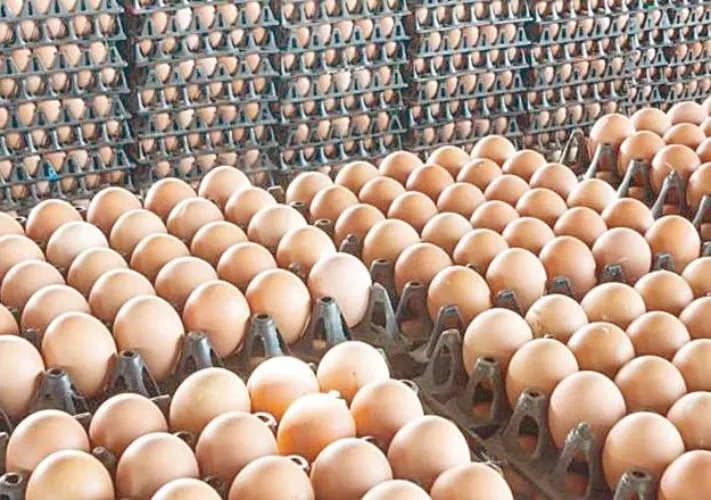
Egypt's egg market has witnessed stability in prices on Friday, October 9, 2026, with rates ranging between 115 and 120 pounds per carton at the farm, according to Abdelaziz El-Sayed, head of the poultry wealth department at the Cairo Chamber of Commerce. This stability comes as the sector has seen significant growth in recent years. The poultry industry in Egypt has achieved an unprecedented investment and production boom, with investments exceeding 200 billion pounds.
The poultry sector is a cornerstone of Egypt's food security and national economy, providing direct and indirect job opportunities for around 3.5 million citizens, as stated by Dr. Tarek Soliman, head of the Animal Wealth and Poultry Development Sector. The sector's growth has been remarkable, with egg production reaching 16 billion eggs, compared to 14 billion eggs in the previous year. Additionally, the production of local poultry has reached 360 million birds, marking an increase of over 12%.
The current egg prices for consumers stand at 135 pounds, with the average annual consumption per person in Egypt from local farms being around 140 eggs, according to statements by Agriculture Minister Alaa Farouk. The egg market offers various types, including white, red, and local eggs, each with its own price range. The diversity in egg types and prices provides consumers with multiple options.
The price of a carton of eggs today ranges between 135 and 140 pounds. Egypt's poultry sector comprises over 27,000 diverse farms, including those producing table eggs, broiler chickens, parent stock, and companies specializing in producing parent and grandparent stock. This diversity contributes to the sector's resilience and ability to meet domestic demand.
Local egg prices have stabilized at 150 pounds per carton. The Egyptian government has made significant strides in enhancing its veterinary capabilities, increasing the production capacity of veterinary vaccines to 2.3 billion doses annually, up from 120 million doses previously. This development has bolstered the country's ability to protect its poultry sector from diseases.
The current egg market trends indicate prices hovering around 135 to 140 pounds. The Ministry of Agriculture is working to expedite the process of opening new markets to absorb the surplus local production, given the current boom in the poultry sector. Efforts to provide financing options for breeders, in collaboration with the National Bank of Egypt and the Egyptian Agricultural Bank, aim to support the purchase of production necessities.
Red egg prices have also stabilized at 140 pounds per carton. The government is focused on supporting small-scale breeders and large producers, while working to open new export markets in Arab, African, and international markets. This strategic move comes after Egypt's approval within the framework of the World Organisation for Animal Health (WOAH) for isolated poultry farms.
Key points
- The Egyptian poultry sector has seen significant growth, with investments exceeding 200 billion pounds and providing job opportunities for around 3.5 million citizens.
- Egg production in Egypt has reached 16 billion eggs, with local poultry production at 360 million birds, marking an increase of over 12%.
- The government is working to open new export markets for Egyptian poultry products, leveraging the sector's growth and Egypt's compliance with international health standards.