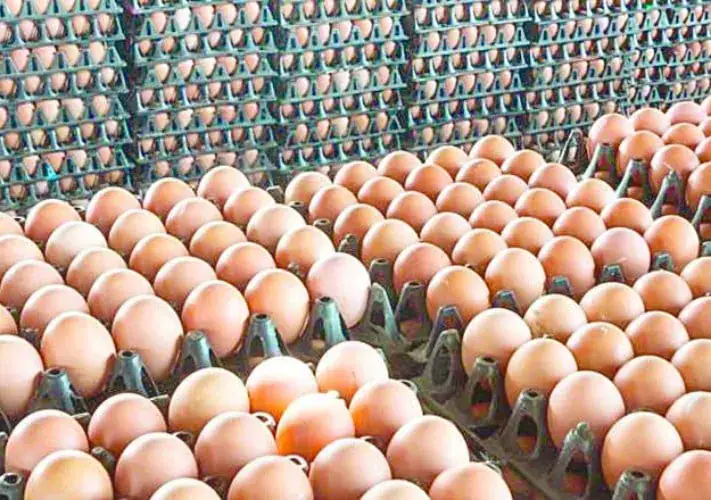
Egypt's poultry sector, comprising over 27,000 diverse farms, has seen significant growth, with egg production reaching 16 billion units, up from 14 billion the previous year. According to Abdelaziz El-Sayed, head of the Cairo Chamber of Commerce's poultry division, egg prices are stable at 110-115 pounds per carton at the farm level. This stability is attributed to the government's efforts to support small and large producers.
The Egyptian government is working to open new export markets in Arab, African, and international countries, leveraging the country's adoption of isolated poultry farm systems, as per World Organisation for Animal Health (WOAH) regulations. This move aims to boost the sector's growth and provide more opportunities for Egyptian producers. With a focus on increasing production efficiency, the government is also providing financing options for breeders to upgrade their facilities.
The country's poultry sector has seen a significant increase in production, with 360 million local breed chickens produced, representing a 12% increase. According to Dr. Tarek Soliman, head of the Animal and Poultry Wealth Development Sector, this growth has contributed to the country's food security and economy. The sector provides employment opportunities for around 3.5 million people, both directly and indirectly.
At the consumer level, egg prices range from 125-135 pounds per carton, with the average Egyptian consuming around 140 eggs per year. The price variation is attributed to differences in egg types, with local breed eggs priced higher than regular eggs. The government's support for the sector has led to an increase in vaccine production, which has helped improve poultry health.
The Egyptian poultry sector has witnessed significant investment, with over 200 billion pounds invested in recent years. This growth has led to an increase in production capacity, with vaccine production rising to 2.3 billion doses per year, up from 120 million doses previously. The sector's growth has also led to an increase in egg exports.
To support breeders, the Ministry of Agriculture is providing financing options in collaboration with the National Bank of Egypt and the Egyptian Agricultural Bank. This financing aims to help breeders purchase necessary production inputs, such as feed, chicks, and vaccines. The ministry is also working to accelerate the opening of new markets to absorb the surplus local production.
The stable egg prices reflect the sector's growth and the government's efforts to support it. With prices ranging from 110-115 pounds per carton at the farm level and 125-135 pounds per carton for consumers, the sector is expected to continue growing, driven by government support and increased production efficiency. The sector's growth has significant implications for Egypt's food security and economy.
Key points
- Egypt's egg production has reached 16 billion units, up from 14 billion the previous year.
- The country's poultry sector provides employment opportunities for around 3.5 million people.
- The government is working to open new export markets for Egyptian poultry products.