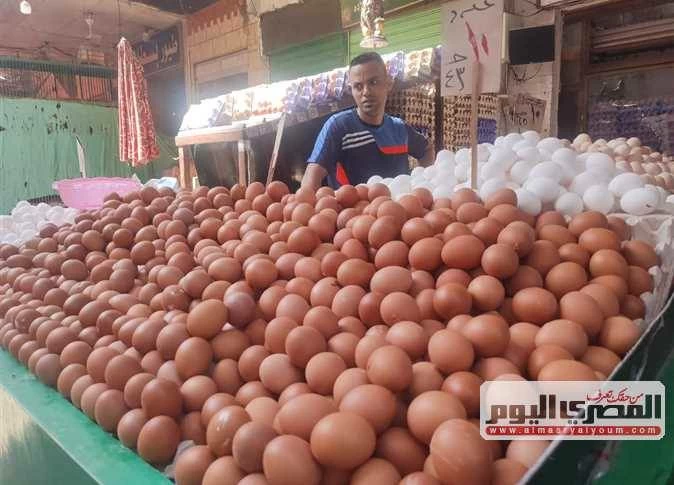
The recent surge in egg prices in Egypt has been attributed to a decrease in supply following the exit of some producers from the market after enduring losses for six months. According to Ahmed Nabil, head of the table eggs division at the Egyptian Poultry Producers Union, the losses incurred by producers reached up to 50% of the production cost, prompting some to cease production. This reduction in supply, coupled with increased demand as schools reopened, led to a rise in egg prices.
The current production cost of a carton of eggs exceeds 115 Egyptian pounds, with the market relying heavily on importing nearly 95% of the raw materials for animal feed, which have seen global price hikes of 30-40%. Nabil described the recent price increase as a "correction" of the market situation after producers had been selling at a loss for several months. He emphasized that the price of eggs, despite the increase, remains one of the cheapest sources of protein compared to other food items.
The head of the table eggs division stated that, in his opinion, a fair price for a carton of eggs at the farm gate would be around 125 Egyptian pounds, allowing producers to achieve a profit margin that would enable them to sustain and expand their operations. He suggested that this price would translate to around 150 Egyptian pounds for consumers. Nabil's comments come as Egyptians have been experiencing rising costs of living, with food prices being a significant concern.
The increase in egg prices has been notable, with cartons selling for as high as 140 Egyptian pounds. Nabil explained that the recent price surge was not merely an increase but a necessary adjustment after producers had been operating at a loss. He pointed out that some producers had been selling eggs below the production cost, which was unsustainable in the long term.
The Egyptian poultry industry has been facing challenges due to the reliance on imported feed, which has been affected by global price fluctuations. The industry has been working to recover from the losses incurred during the past six months, and the price increase is seen as a step towards sustainability. Nabil's comments suggest that the industry is working to stabilize prices and ensure a steady supply of eggs to the market.
The price increase has come at a time when Egyptians are preparing for the new school year, which has led to increased demand for eggs as a staple food item. The rise in prices has been felt by consumers, who are looking for affordable sources of protein. Despite the challenges, Nabil remains optimistic about the industry's prospects, citing the importance of eggs as a food item and the efforts being made to stabilize prices.
As the Egyptian government continues to monitor the situation, producers are working to increase production and stabilize prices. The industry's efforts to recover from the losses of the past six months are ongoing, with a focus on ensuring a steady supply of eggs to the market. With the new school year underway, consumers will be watching closely to see if prices stabilize or continue to rise.
Key points
- The recent increase in egg prices in Egypt is attributed to reduced supply and higher demand, with producers citing losses over the past six months as a major factor.
- The current production cost of a carton of eggs exceeds 115 Egyptian pounds, with the market relying heavily on importing raw materials for animal feed.
- The head of the table eggs division suggests a fair price for a carton of eggs at the farm gate would be around 125 Egyptian pounds, with a consumer price of around 150 Egyptian pounds.