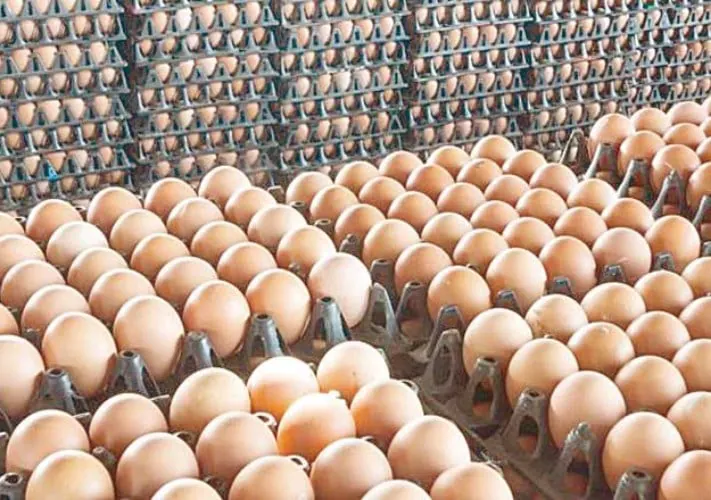
Egypt's egg prices have stabilized, ranging from 120 to 125 Egyptian Pounds (EGP) per carton at farms, according to Abdelaziz El-Sayed, head of the Poultry Wealth Committee at the Cairo Chamber of Commerce. This comes as the country's poultry sector has experienced unprecedented growth in recent years. The sector has become a significant contributor to Egypt's economy and food security.
The poultry sector in Egypt has seen a substantial increase in investments, exceeding 200 billion EGP, according to Dr. Tarek Soliman, head of the Animal Wealth and Poultry Development Sector. The sector provides employment opportunities for around 3.5 million people, both directly and indirectly. Egypt's poultry industry has become one of the key drivers of the country's economy.
The production of table eggs in Egypt has increased to 16 billion eggs, up from 14 billion eggs in the previous year. The production of local breed chickens has also risen to 360 million birds, representing a 12% increase. These numbers demonstrate the significant growth of the poultry sector in Egypt. The sector's growth is attributed to government support and investments.
The average annual consumption of eggs per person in Egypt is around 140 eggs, according to Agriculture Minister Alaa Farouk. The country's egg prices have stabilized at 140 EGP for consumers. The poultry sector's growth has helped meet the increasing demand for eggs and poultry products in Egypt.
The price of a carton of eggs ranges from 140 to 150 EGP, while the price of local breed eggs is around 150 EGP per carton. Egypt's poultry sector comprises over 27,000 farms, including those producing table eggs, broiler chickens, and parent stock. The sector also includes companies specializing in producing parent and grandparent stock.
The Egyptian government has made significant efforts to support the poultry sector, including increasing the production capacity of veterinary vaccines to 2.3 billion doses annually. The government is also working to open new markets to absorb the surplus local production. The sector's growth has been driven by government initiatives and investments.
The Egyptian government is providing financing options for breeders through the National Bank of Egypt and the Agricultural Bank of Egypt. The goal is to support the purchase of production inputs, such as feed, chicks, and veterinary medicines. The government aims to promote the development of the poultry sector and increase its economic returns.
Key points
- Egypt's poultry sector has seen significant growth, with investments exceeding 200 billion EGP.
- The sector provides employment opportunities for around 3.5 million people.
- Egg production has increased to 16 billion eggs annually.