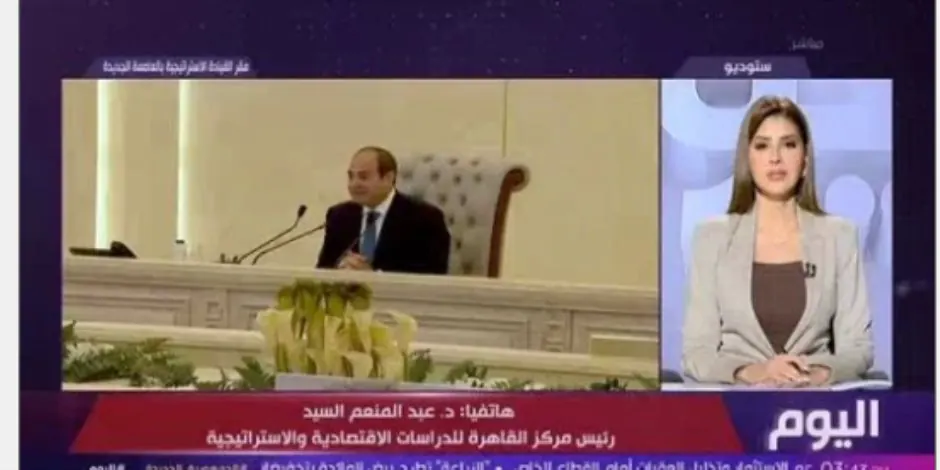
Dr. Abdel Moneim El-Sayed, head of the Cairo Center for Economic Studies and Strategic Analysis, recently highlighted the importance of a meeting between President Abdel Fattah El-Sisi and senior officials. The meeting provided transparency to citizens about current events and their impact on Egypt's internal situation. Egypt, due to its strategic location, has been affected by economic disturbances and geopolitical events in the Middle East.
The country's economic situation has been impacted by various factors, including the situation in the Suez Canal, which has incurred losses exceeding $20 billion due to disturbances in the Bab al-Mandab and Hormuz Strait over the past seven months. President El-Sisi has discussed the sensitivity of the economic scene and its impact on regional conditions.
The rise in oil prices poses an additional challenge to Egypt's economy, with the price of oil in the country's general budget set at around $75 per barrel, while current prices have surpassed $100 and $104 per barrel. If these events continue, oil prices may reach higher levels, with global financial institutions predicting prices could reach $120 per barrel.
The effects of these disturbances are not limited to oil prices but also extend to trade, with increased shipping and insurance costs for goods arriving in Egypt. Global insurance companies have increased shipping costs and insurance values for ships, adding to the burden on trade. Egypt has taken steps to secure its needs, including diversifying sources for strategic goods, particularly wheat.
Egypt has started dealing with new international sources, including Argentina, Brazil, and other Latin American countries, in addition to increasing local production and storage capacity. Projects like the New Delta have begun producing wheat, supporting efforts to secure local needs. The government has taken measures to address rising oil and basic goods prices and mitigate the impact of regional developments on citizens.
The government has implemented policies to reduce the impact of these challenges, including agreements for currency exchange to alleviate pressure on the dollar. An agreement between the Central Bank of Egypt and the Emirates Central Bank allows for 5 billion dirhams in exchange for 69 billion Egyptian pounds, providing a credit limit for transactions between Egypt and the UAE.
Egypt is moving forward with various plans to address potential economic repercussions from regional developments and minimize their impact on citizens. The country is also seeking partnerships and foreign investments to implement industrial projects, increasing local production and reducing import costs, which have exceeded $88 billion.
Key points
- Egypt's economy is under pressure due to geopolitical unrest in the region.
- The country is taking steps to secure its needs, including diversifying sources for strategic goods.
- Egypt is seeking partnerships and foreign investments to boost local production and reduce import costs.