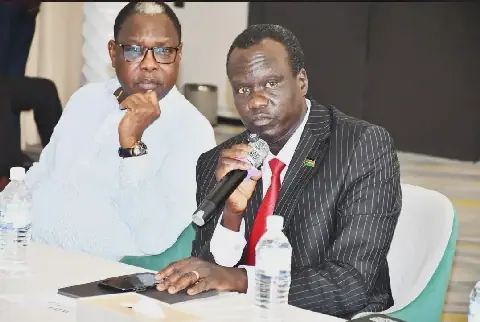
Egyptian Minister of Planning and Economic Development, Ahmed Rostom, recently attended a meeting organized by the Middle East Institute in the United States, on the sidelines of the B20 2026 summit. During the event, Rostom highlighted the resilience of Egypt's economy in the face of regional and international shocks. He expressed confidence in the country's economic prospects, citing a projected growth rate of 5.1% for the 2025/2026 fiscal year. This forecast indicates a positive trajectory for Egypt's economy.
The B20 summit serves as a primary platform for dialogue between the business world and the private sector of major economies affiliated with the G20. The summit aims to develop policy recommendations and investment strategies to be presented to G20 leaders. Rostom's participation in the event was complemented by Egyptian Minister of Investment and Foreign Trade, Mohamed Farid Saleh, and Egyptian Ambassador to the United States, Mohamed El-Molla. Their presence underscored Egypt's commitment to engaging with global economic stakeholders.
In his opening address, Rostom emphasized Egypt's economic resilience and its ability to maintain a solid growth trajectory despite regional and international challenges. He noted that the country's real GDP grew by 5.1% in the 2025/2026 fiscal year, up from approximately 4.4% in 2024/2025. Rostom attributed this performance to the effectiveness of proactive measures adopted by the Egyptian government. These measures have helped mitigate the impact of external shocks and promote economic stability.
The Egyptian government is currently finalizing the National Program for Economic Transformation, which is based on a territorial development approach. This approach involves identifying investment opportunities and competitive advantages in each governorate, with the goal of presenting integrated project portfolios that are ready for financing. The program is being developed in close cooperation between various ministries and public agencies to ensure complementarity between public investments and private sector opportunities.
A key objective of the National Program for Economic Transformation is to direct investments towards meeting the actual needs of citizens, with priority given to the most disadvantaged regions. By adopting this approach, the Egyptian government aims to promote inclusive growth and reduce regional disparities. The program's implementation will rely on close collaboration between public and private sector stakeholders to maximize the impact of investments and create sustainable economic opportunities.
Rostom's presentation at the B20 summit highlighted Egypt's efforts to strengthen the role of the private sector and stimulate investment. The government's strategy involves creating an enabling environment for private sector growth, through a combination of policy reforms and targeted incentives. By leveraging the expertise and resources of the private sector, Egypt aims to accelerate economic growth and achieve sustainable development objectives.
The Egyptian government's commitment to economic transformation and private sector development has garnered attention from international stakeholders. The country's participation in the B20 summit reflects its desire to engage with global economic leaders and promote its investment opportunities. With a projected growth rate of 5.1% in 2025/2026, Egypt is poised to maintain its positive economic trajectory and attract further investment from the international community.
Key points
- Egypt's economy is projected to grow 5.1% in 2025/2026.
Reporting sources
- B20 aux États-Unis : Rostom annonce une croissance de 5,1 % de l’économie égyptienne · Le Progrès Egyptien