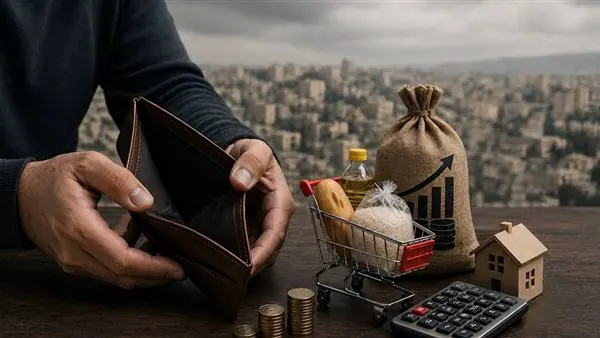
Egypt is grappling with a severe economic challenge as inflation continues to rise, affecting the daily lives of its citizens. The country's inflation rate reached 14.3% in June 2026, according to the International Monetary Fund (IMF), with predictions of a further increase to 16.7% in the second half of the year. This has resulted in a significant decrease in the purchasing power of Egyptian families, who are now forced to make difficult choices between essential expenses.
The impact of inflation on Egyptian families is multifaceted, with many struggling to afford basic necessities like food, energy, and healthcare. The IMF predicts that Egypt's economic growth will slow down to 4.4% in the 2026/2027 financial year, which will further exacerbate the economic challenges faced by families. As a result, families are being forced to re-evaluate their spending habits and prioritize their expenses, with many having to sacrifice non-essential items.
Experts say that the current economic situation has led to a change in the way Egyptian families manage their finances. According to Mohamed Fouad, an economic expert and member of the Egyptian Parliament, families are now more cautious with their spending, often having to choose between essential expenses. Fouad notes that the increase in prices is not just about the cost of goods and services, but also about the way families make decisions about their spending.
The decline in savings is another significant consequence of the economic challenges faced by Egyptian families. With many families living paycheck to paycheck, they are unable to save for the future or cover unexpected expenses. This has led to a decrease in the overall standard of living, with many families having to make significant adjustments to their lifestyle.
Khaled El-Shafei, an economic expert and head of the Cairo Center for Economic Studies, notes that the current economic situation has led to a change in the way families prioritize their expenses. With many families struggling to afford basic necessities, they are being forced to make tough decisions about their spending. El-Shafei suggests that the government needs to implement policies that support low-income families and help them cope with the economic challenges.
The economic challenges faced by Egyptian families have also had an impact on their long-term plans, including education and investment. According to Dr. Yumn El-Hamaki, an economics professor at Ain Shams University, many families are being forced to re-evaluate their priorities and make difficult decisions about their children's education. With the cost of education increasing, many families are having to choose between different educational options.
The ongoing economic challenges faced by Egyptian families are likely to have a lasting impact on the country's economic and social landscape. With inflation expected to remain high, families will continue to face significant challenges in making ends meet. The government will need to implement policies that support low-income families and help them cope with the economic challenges.
Key points
- Egyptian families are struggling to make ends meet due to high inflation, forcing them to prioritize needs over wants.
- The decline in savings is a significant consequence of the economic challenges faced by Egyptian families.
- The government will need to implement policies that support low-income families and help them cope with the economic challenges.