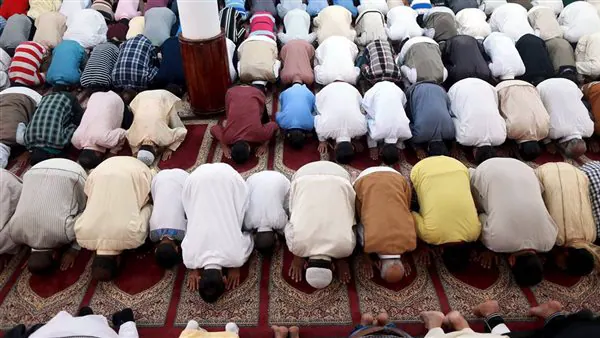
Dar al-Ifta, Egypt's official Islamic advisory body, has addressed a query regarding the ruling on performing missed prayers that were intentionally left out. The question was submitted through their official Facebook page. The inquirer sought clarification on whether an individual who deliberately missed prayers for a period and has since repented can make up for the missed prayers.
According to Dar al-Ifta, performing missed prayers is an obligation, regardless of whether they were missed with or without a valid excuse. This means that individuals who intentionally skipped prayers must perform them as soon as possible. Furthermore, Dar al-Ifta emphasized that merely performing the missed prayers does not automatically absolve one of guilt; repentance is also required.
Dar al-Ifta referenced the opinions of various Islamic scholars on this matter. For instance, the Maliki scholar Ibn Baziiza stated in his book "Rawdat al-Mustabinin" that there is a difference of opinion among scholars regarding intentionally missed prayers. However, the majority view is that such prayers must be made up after repentance and seeking forgiveness.
The Hanafi scholar Badr al-Din al-Ayni also expressed a similar view in his book "al-Binaya Sharh al-Hidaya". He stated that if someone remembers a missed prayer, they must perform it, regardless of whether it was missed intentionally or unintentionally. This view is shared by scholars such as Malik and al-Shafi'i.
Dar al-Ifta cited a hadith from the Prophet Muhammad, as reported by Imam Bukhari, in which the Prophet stated that if someone forgets a prayer, they should perform it as soon as they remember. Dar al-Ifta used this hadith to argue that if making up forgotten prayers is obligatory, then it is even more so for intentionally missed prayers.
The Egyptian Islamic advisory body emphasized that making up intentionally missed prayers is in line with the principles of repentance. According to Dar al-Ifta, one of the conditions of valid repentance is to abandon the sinful behavior and make amends. Therefore, individuals who intentionally missed prayers must perform them to fulfill this condition.
In conclusion, Dar al-Ifta's guidance emphasizes the importance of making up missed prayers, regardless of the circumstances under which they were missed. Individuals who have intentionally missed prayers must perform them and also seek repentance to absolve themselves of guilt.
Key points
- Dar al-Ifta rules that performing missed prayers is an obligation, regardless of whether they were missed intentionally or unintentionally.
- Merely performing missed prayers does not automatically absolve one of guilt; repentance is also required.
- The majority of Islamic scholars agree that intentionally missed prayers must be made up after repentance and seeking forgiveness.