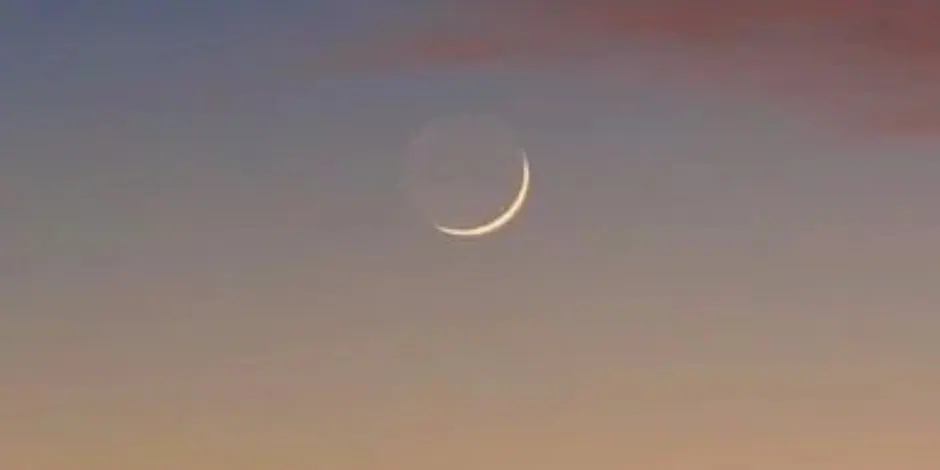
Dar Al-Ifta in Egypt is conducting a specialized training course on 'Islamic Astronomy' in collaboration with the Al-Azhar Global Center for Islamic Astronomy and the Faculty of Sciences at Al-Azhar University in Cairo. The course has brought together a group of specialists in astronomy, climate, and meteorology. On the third day of the course, three lectures were presented. These covered the relationship between climate and astronomical phenomena, the movement of the moon and computer modeling, and the role of artificial intelligence in calculating the moon's movement and sighting the lunar crescent.
Dr. Tariq Sayyad, a professor of applied climatology and former head of the Astronomy and Meteorology Department at Al-Azhar University's Faculty of Sciences, emphasized that meteorological conditions play a significant role in monitoring the lunar crescent. He explained that factors such as atmospheric transparency, clouds, humidity, and dust affect the possibility of visual observation. Sayyad also clarified that the four seasons are primarily related to the tilt of the Earth's axis during its rotation around the Sun, not the Earth's proximity or distance from the Sun.
Dr. Sayyad further clarified that there is no causal relationship between solar and lunar eclipses and natural disasters like earthquakes, volcanic eruptions, and floods. He also refuted the notion that the phases of the moon directly influence rainfall, stating that precipitation is linked to complex atmospheric factors including evaporation, condensation, air mass movement, and atmospheric pressure. Sayyad stressed the importance of consulting specialists when interpreting astronomical and meteorological phenomena and distinguishing between scientific facts and non-scientific interpretations.
Dr. Ali Jamal, an assistant professor of astrophysics at Al-Azhar University's Faculty of Sciences, noted that the occurrence of the astronomical conjunction and the age of the lunar crescent alone are insufficient to determine the possibility of sighting the crescent, whether with the naked eye or using instruments. He pointed out that determining the possibility of sighting depends on several variables, including the crescent's height at sunset, elongation, duration, and the percentage of illuminated surface.
Dr. Jamal added that computer models can accurately determine the moon's position and angles, but they do not replace field observations, as actual sighting is affected by variable factors such as clouds, humidity, dust, and twilight. Meanwhile, Dr. Ahmed Hafiz, an assistant professor of space dynamics at Al-Azhar University's Faculty of Sciences, discussed applications of artificial intelligence in calculating the moon's movement and sighting the lunar crescent. Hafiz explained that astronomical calculations determine the positions of celestial bodies and possibilities, while artificial intelligence can help predict the likelihood of sighting and analyze field images.
Hafiz presented a practical application related to the crescent moon of Ramadan 1445 AH, noting that calculations in Cairo and Mecca indicated that sighting was not possible in those areas, while opportunities for sighting existed in parts of the Americas according to used astronomical criteria. He also reviewed the use of neural networks and machine learning techniques in image processing and reducing atmospheric noise to help display a weak crescent moon.
The course is part of Dar Al-Ifta's efforts to qualify researchers and conduct religious observations, integrating astronomical calculations and meteorological conditions with Islamic law and utilizing modern technologies to determine the timing of worship and the beginning of lunar months.
Key points
- Dar Al-Ifta in Egypt is conducting a specialized training course on 'Islamic Astronomy' in collaboration with the Al-Azhar Global Center for Islamic Astronomy and the Faculty of Sciences at Al-Azhar University in Cairo.
- The course aims to qualify researchers and conduct religious observations, integrating astronomical calculations and meteorological conditions with Islamic law.
- Artificial intelligence can help predict the likelihood of lunar crescent sighting and analyze field images.