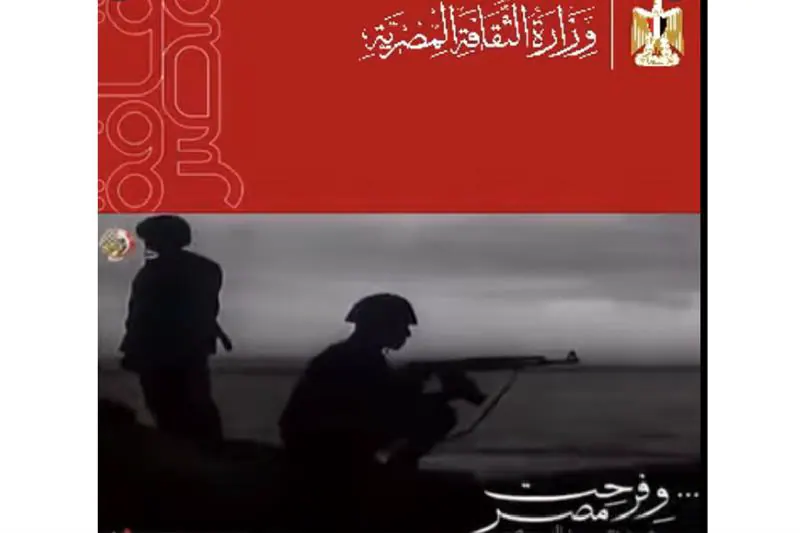
Egypt's Ministry of Culture has released rare footage of the 1973 victory, marking the anniversary of the war. The footage, released under the slogan "And Then Egypt Rejoiced," was posted on the Amanet Al Motamarat Facebook page and features accounts of the heroic deeds of Egyptian martyrs, documentaries about them, and scenes of Egyptians celebrating in the streets. The footage is also being shown on screens inside Metro trains throughout the day.
The released footage includes a rare video of renowned composer Sheikh Imam performing "O Abdel Wadoud," a song he composed to lyrics by iconic Egyptian poet Ahmed Fouad Negm. The song conveys a message from a father whose eldest son was martyred in the war to his second son, who is fighting on the front lines. This song has become an iconic representation of the war and its impact on Egyptian families.
A documentary produced by the Egyptian Military Moral Affairs, titled Somoud (Steadfastness), recounts the resilience of more than 400 Egyptian fighters who defended Suez against an Israeli invasion for 134 consecutive days without access to food or water and never surrendered during the Kabrit Battle. The documentary showcases the bravery and determination of the Egyptian soldiers during the war.
Statement No. 7, issued on 6 October 1973, was broadcast on the radio, announcing that Egyptian military forces had successfully crossed the Suez Canal and controlled the eastern banks of the canal. The statement also mentioned that the Navy Forces were protecting the left side of the forces on the coast of the Mediterranean, where important enemy targets on Sinai's northern coast were bombed and hit directly.
The famous song "O World, Can You Hear Me?" was written and composed by Abdou Al Othmaly, one of the icons of the Semsemya heritage musical tradition. Semsemya has long been part of Egypt's intangible cultural heritage due to its close connection with songs of resistance and resilience. The Semsemya is now listed on UNESCO's World Heritage List.
The released footage is part of the Culture Ministry's efforts to preserve and showcase Egypt's history and cultural heritage. The ministry has been working to document and archive historical events, including the 1973 war, to make them accessible to future generations. This initiative aims to promote national pride and awareness of Egypt's rich history.
The anniversary of the 1973 victory is a significant event in Egyptian history, marking the country's triumph over Israeli forces. The celebrations and release of rare footage serve as a reminder of the country's resilience and determination. The event is being commemorated through various events and activities, including the screening of documentaries and historical footage.
Key points
- The Culture Ministry released rare footage documenting the 1973 war and subsequent celebrations.
- The footage includes a rare video of Sheikh Imam performing "O Abdel Wadoud" and a documentary about the Kabrit Battle.
- The release of the footage aims to preserve and showcase Egypt's history and cultural heritage.