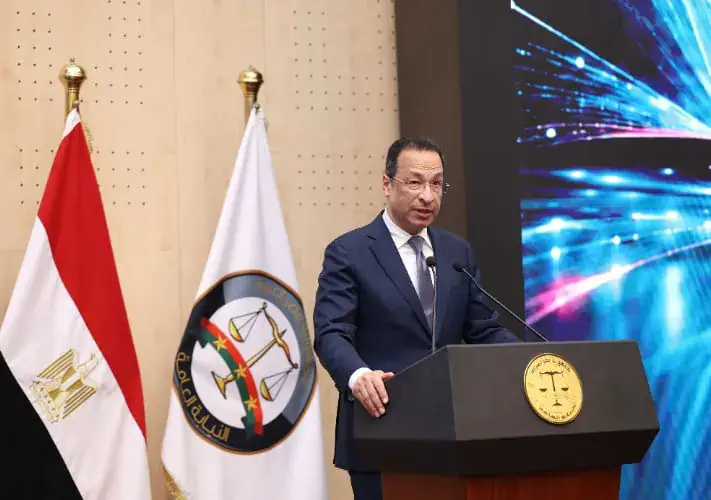
Egypt's Minister of Communications and Information Technology, Engineer Rafeat Hendy, recently attended a ceremony hosted by the General Prosecution, titled "The General Prosecution's Journey from Digital Justice to Smart Justice." The event, held at the Office of the Public Prosecutor, saw the signing of a cooperation protocol between the General Prosecution, the Ministry of Communications and Information Technology, the Ministry of Social Solidarity, Orange Egypt, and E-Finance for Financial and Digital Investments.
During the ceremony, Hendy emphasized the Ministry's commitment to collaborating with various state institutions to harness technology and enhance the efficiency of institutional work, improve public services, and protect citizens' rights. He highlighted that the use of artificial intelligence in supporting legal work is a key aspect of this effort, particularly in areas closely related to people's rights and interests.
The protocol aims to expand the availability of digital services, making it easier for beneficiaries to access them through mobile devices. This partnership between state institutions and the private sector brings together capabilities and expertise to serve citizens. Hendy stressed that the Ministry of Communications and Information Technology is committed to continuing this cooperation with the General Prosecution and other state institutions.
The event also saw the launch of the General Prosecution's Data Center for Artificial Intelligence, which provides services to citizens. Hendy and other attendees, including the Public Prosecutor, Counselor Mohamed Shouqi Eiyad, and Minister of Social Solidarity, Dr. Maya Morsi, toured the center to learn about the services it offers.
In his speech, Hendy noted that the use of technology in the state's administration is a key aspect of Egypt's national vision for building a modern and effective state. He emphasized that the decision to use artificial intelligence must remain in the hands of those responsible and authorized, ensuring that technology serves humanity.
The Minister highlighted the importance of this protocol in simplifying procedures, particularly in family services, which can make a significant difference in the lives of entire families. He also pointed out that the digital transformation is a project that integrates the responsibilities of state institutions, with a crucial humanitarian aspect.
The cooperation protocol was signed on the sidelines of the ceremony, marking a significant step in the state's efforts to adopt artificial intelligence and digital technologies. The Ministry of Communications and Information Technology reaffirmed its commitment to continuing this cooperation, believing that the success of digital transformation is measured by its impact on institutional efficiency, service quality, and citizen trust.
Key points
- Egypt's Communications Minister emphasizes cooperation with state institutions to harness technology and enhance institutional work.
- A new data center for artificial intelligence has been launched to provide services to citizens.
- The protocol aims to expand digital services and simplify procedures, particularly in family services.