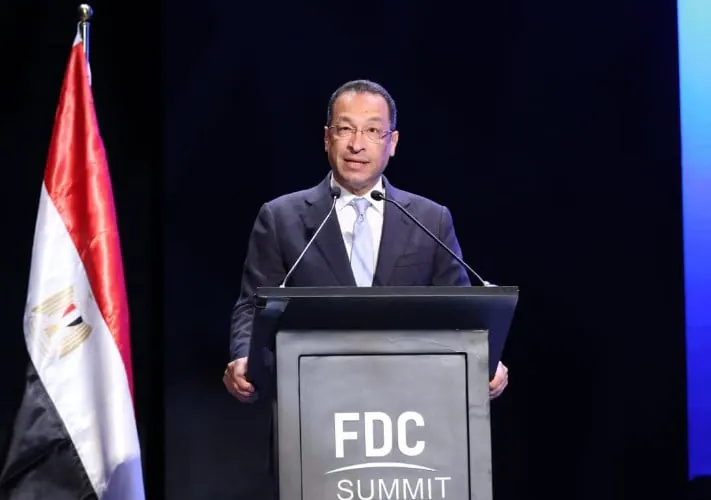
Egypt's Minister of Communications and Information Technology, Eng. Rifat Hendy, recently opened the eighth edition of the FDC Summit. The event, which took place from September 22 to 24, was held under the auspices of the Ministries of Communications and Information Technology and Industry. Hendy emphasized that the ministry's work is based on a comprehensive vision aimed at building a digital economy. This vision seeks to contribute to the country's GDP, create job opportunities, and enhance the delivery of government services to citizens.
The FDC Summit brought together a diverse group of participants, including government representatives, industry leaders, and experts in communications and information technology. Hendy highlighted the ministry's objectives, which include supporting innovation and entrepreneurship. These efforts aim to localize technology and develop a knowledge-based economy. Additionally, the ministry focuses on enhancing digital sovereignty by protecting data and ensuring decision-making independence.
Hendy discussed the ministry's efforts to support entrepreneurship and startups through 24 "Egypt Digital Innovation" centers in 20 governorates. These centers provide comprehensive programs for skill development and project incubation. They also connect companies with investors and facilitate market access. Furthermore, Hendy mentioned that Egypt has been working on a national framework for artificial intelligence since 2019. The second phase of the national AI strategy aims to support over 250 startups and train more than 30,000 specialists by 2030.
The minister also highlighted the importance of data centers in the digital economy. He noted that Egypt's geographical location and digital infrastructure make it an ideal location for data centers. With 20 international submarine cables passing through the country, Egypt can leverage its position to host data, attract data centers and cloud services, and develop applications. The ministry is working on a national strategy for data centers, which is expected to be launched by the end of the year.
Cybersecurity is another key area of focus for the ministry. Hendy emphasized that it is a crucial component of national security and digital trust. The state continues to implement the second edition of the National Cybersecurity Strategy 2023-2027. The ministry is also working on the third edition of the strategy to address emerging threats and challenges. Hendy reported that the communications and information technology sector has become a key driver of growth and investment.
The sector's growth rate exceeded 19% during the 2025/2026 fiscal year, with a remarkable 24.3% growth in the last quarter. This growth has made the sector one of the fastest-growing in the country. Hendy expressed his welcome to companies that can add value to the Egyptian market, transfer knowledge, and support research and development. He also emphasized the importance of cooperation with African countries to exchange experiences and expertise.
The FDC Summit also saw the signing of a memorandum of understanding between MCS and the Industrial Modernization Center. The agreement aims to support cybersecurity awareness and capacity building in the industrial sector. The summit's eighth edition focused on artificial intelligence, data centers, cloud computing, and cybersecurity. It brought together decision-makers, regulatory bodies, and industry leaders to discuss opportunities, partnerships, and practical solutions.
Key points
- Egypt's communications and information technology sector grew by 24.3% in the last quarter of the previous fiscal year.
- The sector's growth rate exceeded 19% during the 2025/2026 fiscal year.
- Egypt aims to support over 250 artificial intelligence startups and train more than 30,000 specialists by 2030.