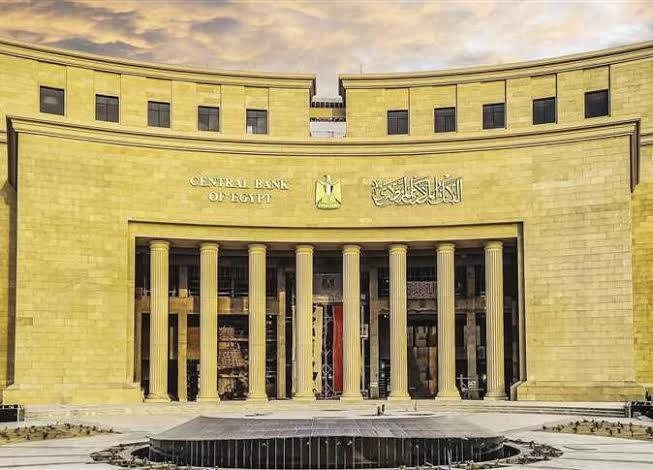
Egypt's central bank is scheduled to meet on Thursday to determine its decision on interest rates, amidst varying predictions from experts on whether to maintain current rates or increase them. The decision comes as the country navigates through economic challenges, including inflation and foreign investment flows. The central bank's decision will be influenced by several factors, including the US Federal Reserve's upcoming decision and the current global economic landscape.
Dr. Medhat Nafea, an economic expert and member of the teaching staff at Cairo University's Economics Faculty, expects the Central Bank of Egypt to keep interest rates unchanged during the Monetary Policy Committee meeting. He cited the US Federal Reserve's impending decision and the movement of "hot money" as key factors that will influence the Egyptian central bank's decision. According to Nafea, the flow of "hot money" will be a crucial element in the central bank's equation.
Nafea further explained that inflation is not currently a decisive factor, given its relatively slow movement, whether in terms of general or core inflation. He noted that the "sticky inflation" driven by energy shocks will not be addressed by monetary policy, but rather dealt with in the short term. The expert emphasized the importance of preserving foreign exchange reserves, which cannot be depleted at this time.
On the other hand, Sohair El-Damati, a banking expert, anticipates that the Central Bank of Egypt will likely decide to keep interest rates steady, given the decline in inflation rates in recent times. She noted that the US Federal Reserve's decision will play a significant role in determining the direction of Egyptian monetary policy. El-Damati warned that raising interest rates could negatively impact the production sector, as higher borrowing costs may be passed on to consumers.
El-Damati also highlighted that the decrease in inflation provides the central bank with room to maintain current interest rates. She pointed out that the interest rate margin remains high, supporting the continuation of a policy of keeping interest rates unchanged for now. The expert also noted that the ongoing geopolitical tensions and conflicts in the Middle East add to the uncertainty surrounding economic trends.
According to El-Damati, the best course of action, in her opinion, is to hedge and maintain the current interest rate policy without change until the economic situation becomes clearer by the end of the year. The expert's comments reflect the cautious approach many economists are taking in light of the current economic uncertainty.
The Central Bank of Egypt's decision on interest rates will have significant implications for the country's economy, particularly in terms of inflation, foreign investment, and economic growth. The bank's decision will be closely watched by investors, analysts, and policymakers, both domestically and internationally.
Key points
- Egypt's central bank is set to decide on interest rates on Thursday.
- Experts are divided on whether the central bank will keep rates steady or raise them.
- The decision will be influenced by factors including the US Federal Reserve's upcoming decision and the movement of "hot money".