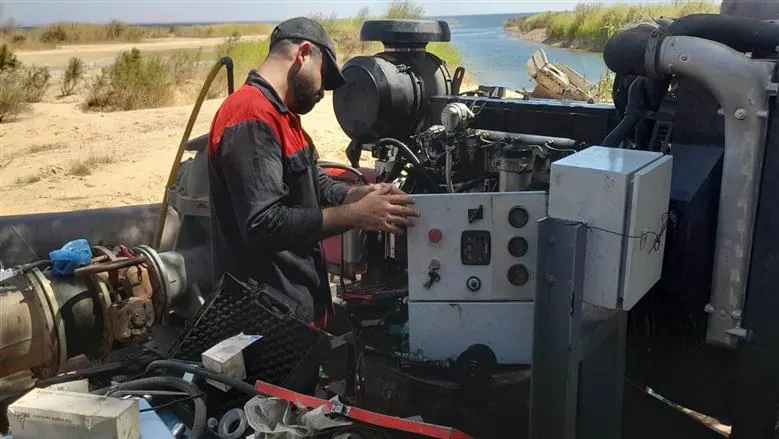
The irrigation system in Egypt's Aswan province has seen significant improvements in the villages of Food Aid, located on the shores of Lake Nasser. Following urgent interventions to address technical issues at the main irrigation pump in Bashayer Al-Khair village, water has begun flowing regularly to agricultural lands. This development aims to provide necessary water supplies for crops and maintain the stability of agricultural activities in the region. The efforts are part of a broader plan to support farmers and ensure the continuity of agricultural production.
Aswan Governor, Engineer Amr Lashin, has taken a proactive approach to resolving the issues affecting the irrigation system. He instructed the relevant company to quickly address the malfunction of the main irrigation pump at Bashayer Al-Khair, which supplies water to the village's drainage system. The necessary repairs and maintenance were carried out, resulting in the resumption of normal operations and water reaching agricultural lands. This swift response demonstrates the authorities' commitment to addressing problems that may impact farmers, particularly during critical stages of crop growth.
In addition to resolving the immediate issue, Governor Lashin has also ordered a comprehensive inspection of irrigation pumps at various stations in Food Aid villages. This includes conducting maintenance work and verifying the efficiency and performance of the pumps. The governor has emphasized the importance of proactive measures to prevent future malfunctions, especially for pumps still under warranty. These efforts will benefit villages such as Kalabsha, Jorf Hussein, Thomas, and Afia, in addition to Bashayer Al-Khair.
To further enhance the irrigation system, the Aswan government plans to support each irrigation station in the villages of Jorf Hussein, Bashayer Al-Khair, Kalabsha, Thomas, and Afia with two additional pumps. This move is part of a plan to increase the operational capacity of the stations and prepare them to meet current and future needs. By bolstering the irrigation system, the authorities aim to ensure a stable water supply for agricultural lands and support the local farming community.
The Aswan government is committed to ongoing monitoring and evaluation of the irrigation system in Food Aid villages. This includes regular maintenance, prompt addressing of technical issues, and providing additional support to irrigation stations. By taking a proactive approach, the authorities aim to minimize the risk of water shortages or disruptions to agricultural activities. These efforts are crucial in maintaining the stability of agricultural production and supporting the local economy.
The improvements to the irrigation system in Aswan's Food Aid villages are part of a broader strategy to enhance services for local farmers. By addressing technical issues and investing in infrastructure, the authorities aim to create a more reliable and efficient irrigation system. This, in turn, will help to increase agricultural productivity and contribute to the region's economic development. The government's commitment to supporting farmers and ensuring the continuity of agricultural activities is evident in its proactive approach to addressing challenges.
As the Aswan government continues to work on improving the irrigation system, farmers in Food Aid villages can expect more reliable access to water for their crops. The ongoing efforts to enhance the irrigation infrastructure will help to reduce the risk of crop failures and support the local agricultural sector. By investing in the irrigation system, the authorities are demonstrating their commitment to the well-being of local farmers and the long-term sustainability of agricultural production in the region.
Key points
- The Aswan government has addressed technical issues affecting the irrigation system in Food Aid villages, ensuring a stable water supply for agricultural lands.
- Additional pumps will be provided to irrigation stations in the villages to increase operational capacity and prepare for future needs.
- The authorities are committed to ongoing monitoring and evaluation of the irrigation system to minimize the risk of disruptions and support local farmers.