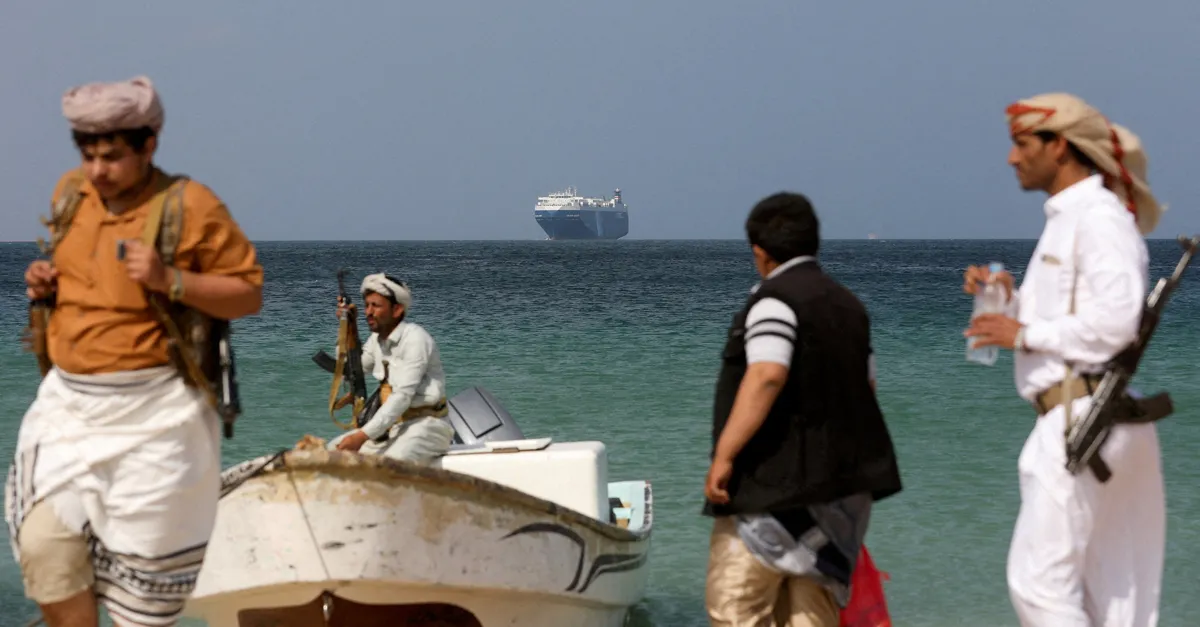
The Houthi militia has sent a message to the European Union assuring them that they will not target European ships in the Red Sea. This move comes as the group expands its control over the strategic Bab al-Mandab Strait. According to the Financial Times, the message was sent on September 10, the same day the Houthis announced their control over the Yemeni port of Mocha. The group claims that their military operations will not affect freedom of navigation in the strait.
The Houthis' diplomatic efforts also extend to the US, with the group conducting negotiations with the Trump administration via Oman. The Houthis assured the US that they do not intend to target American ships. US President Donald Trump publicly confirmed these reassurances, stating that the Houthis do not want to fight with the US and allow most ships to pass through. However, the reality on the ground paints a more complex picture, with the Houthis rekindling their conflict with Saudi Arabia.
Despite the Houthis' reassurances, the group has escalated its attacks on Saudi oil facilities and vessels. In July, the Houthis announced a blockade on Saudi ports and launched attacks on oil tankers. The group has also taken control of several islands in the Red Sea. This escalation has raised concerns among international shipping companies, particularly those transporting oil.
The Houthis' actions have led to a mixed response from the international community. While some European countries, such as France, have deployed troops and defense systems to protect their interests in the region, the US has maintained a more cautious approach. The US has provided limited defensive support to its allies but has refused to engage in the Saudi-led campaign against the Houthis.
The situation in the Red Sea has also had an impact on global shipping. While the number of oil tankers heading to Saudi ports has decreased, container ships have seen a resurgence in traffic through the Red Sea and the Suez Canal. According to shipping analysts, the Houthis' attacks have not targeted container ships in over a year, leading some companies to resume services.
The European Union is taking steps to address the situation, with the EU's foreign policy chief, Josep Borrell, warning that the Houthis' attacks undermine the global economy. The EU is also discussing the integration of its naval forces with Saudi Arabia to protect shipping in the region.
The conflict in the Red Sea has significant implications for global trade and security. As the Houthis continue to escalate their actions, the international community will be watching closely to see how the situation unfolds. The EU and other countries have a vested interest in maintaining stability in the region and ensuring the free flow of trade.
Key points
- The Houthis' reassurances to Europe and the US do not match their escalating actions in the Red Sea.
- The conflict in the Red Sea has significant implications for global trade and security.
- The international community is taking a cautious approach to addressing the situation, with some countries deploying troops and defense systems to protect their interests.