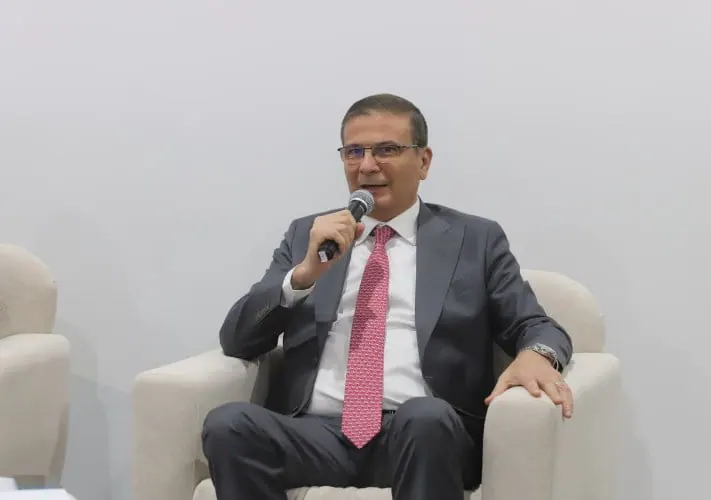
Egyptian Minister of Agriculture, Alaa Farouk, has emphasized the importance of digitalization and artificial intelligence in driving growth in the country's agricultural sector. He noted that the ministry is focused on increasing production per unit of land and water by developing and disseminating high-yielding, early-maturing crop varieties that require less water. This approach has led to increased productivity, with average wheat production per feddan rising to around 20 ardebs.
The minister highlighted the expansion of best agricultural practices, such as farming on raised beds, laser leveling, and the use of agricultural gypsum. These practices have been applied to approximately 2.8 million feddans, resulting in more efficient use of land and water resources and reduced waste. By adopting these methods, the ministry aims to optimize agricultural output while minimizing environmental impact.
In terms of digital transformation, Farouk revealed that the ministry is leveraging modern technology, digitalization, and artificial intelligence to improve productivity and inform decision-making. The ministry is working on several digital platforms, including a unified agricultural data platform, a national land registry, and a farmer's card system. These initiatives are designed to enhance the efficiency and effectiveness of agricultural operations.
The minister also mentioned the launch of a smart electronic library by the Desert Research Center, which provides valuable resources for researchers and farmers. Additionally, the ministry is developing a digital agricultural extension system to provide farmers with expert advice and guidance. This system is expected to improve the dissemination of knowledge and best practices among farmers.
To further accelerate digitalization in the agricultural sector, the ministry has strengthened its collaboration with the Egyptian government's "Egypt's Future" initiative. This partnership involves working with Digital Smart, a company focused on digital transformation and infrastructure development. The goal is to create opportunities for start-ups to participate in developing technological applications and solutions.
The applications and solutions developed through this partnership are expected to have a significant impact on the agricultural sector, particularly in areas such as smart irrigation, water management, and data analysis. By harnessing the power of technology and innovation, the ministry aims to address some of the sector's most pressing challenges and improve overall productivity.
The emphasis on digitalization and artificial intelligence in Egypt's agricultural sector reflects the government's commitment to modernizing and transforming the industry. By leveraging these technologies, the ministry hopes to increase efficiency, reduce waste, and enhance the livelihoods of farmers and rural communities. The sector's growth is critical to Egypt's economic development and food security.
Key points
- The Egyptian Ministry of Agriculture is leveraging digitalization and artificial intelligence to improve productivity and efficiency in the sector.
- The ministry has developed several digital platforms to support its efforts, including a unified agricultural data platform and a national land registry.
- The government has strengthened its collaboration with the "Egypt's Future" initiative to accelerate digital transformation in the agricultural sector.