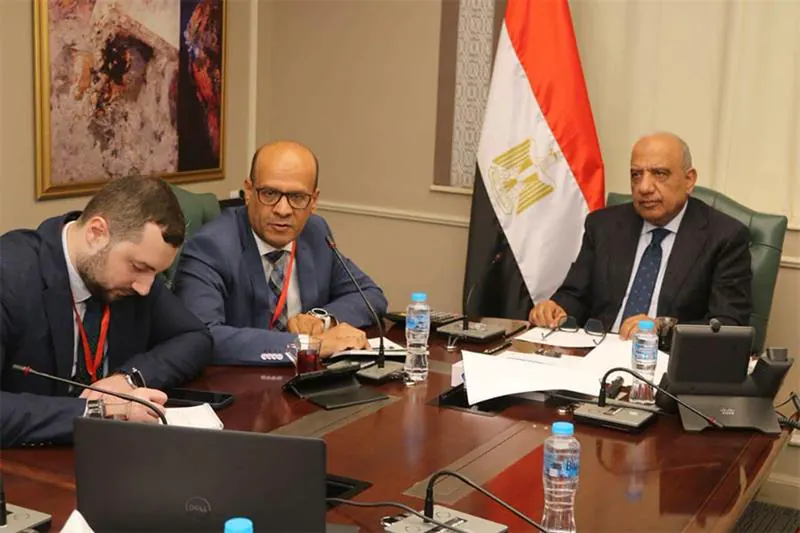
Egyptian Electricity and Renewable Energy Minister Mahmoud Esmat held talks with Ksenia Sukhotina, director general of Rosatom Smart Utilities, on a proposed seawater desalination project at the El-Dabaa Nuclear Power Plant site. The videoconference meeting was part of Egypt's sustainable development plan to maximize returns from national and strategic projects. The discussions focused on standards, regulations, and requirements for the potential establishment of a seawater desalination facility integrated with the El-Dabaa project's infrastructure.
Rosatom Smart Utilities is a subsidiary of the Russian state-owned nuclear energy corporation Rosatom, which works with Egypt's first nuclear power plant, known as the El-Dabaa project. The talks explored the use of Rosatom's technologies and expertise in seawater desalination and ways to increase the project's economic and environmental benefits. The two sides also discussed the next steps to finalize the project's technical and economic plans and implementation requirements.
The discussions covered plans to localize the production of equipment and components used in desalination projects in Egypt and increase the participation of local companies in the project's supply chains. This would support technology transfer, strengthen local industrial capabilities, and increase the share of locally produced components. It could also help establish a specialized industrial base serving desalination projects in Egypt and regional markets.
Minister Esmat said the project would help meet the water needs required under Egypt's sustainable development plan and support development plans, urban expansion, and economic and industrial activities in the area. He stressed that integrating desalination capabilities with nuclear power generation is an advanced global trend that opens new horizons for sustainable development.
The talks also covered maximizing the economic and environmental benefits of the desalination system by studying and utilizing the salts and minerals extracted from the desalination process. This could support the development of related industries and increase the value of the by-products. Egypt and Russia have a strategic partnership and longstanding bilateral relations, providing a basis for maximizing the economic returns of the El-Dabaa project.
The El-Dabaa nuclear power plant is a significant project for Egypt's energy sector, and the addition of a seawater desalination facility could provide a reliable source of water for the region. The project is part of Egypt's efforts to increase its water and energy resources, supporting the country's sustainable development plan.
The discussions between Minister Esmat and Sukhotina reflect the ongoing cooperation between Egypt and Russia on the El-Dabaa project. The two countries are working together to ensure the project's success, which is expected to have a significant impact on Egypt's energy and water sectors.
Key points
- Egypt and Rosatom are discussing a proposed seawater desalination project at the El-Dabaa Nuclear Power Plant site.
- The project aims to meet Egypt's water needs and support sustainable development plans.
- The talks covered plans to localize the production of equipment and components used in desalination projects in Egypt.