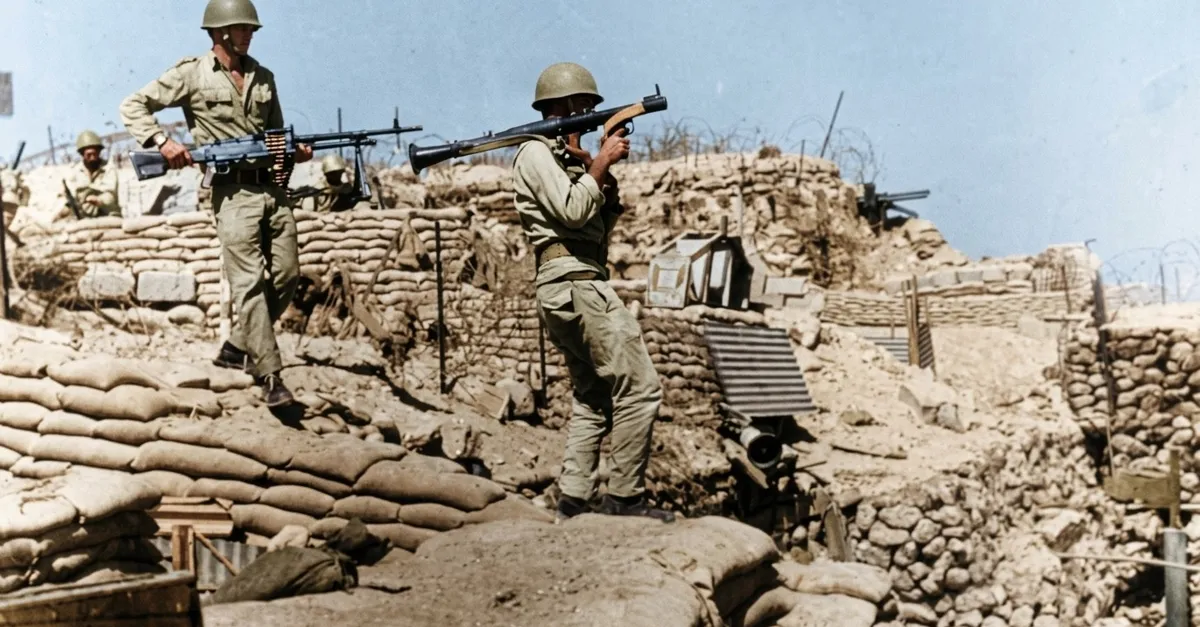
The October War, a defining moment in Egypt's modern history, began with a period of rebuilding and rearmament following the 1967 Arab-Israeli War. The Egyptian military, under the leadership of President Anwar El-Sadat, embarked on a journey of intense training and strategic planning, which would ultimately lead to the country's victory in 1973. This period of rearmament and rebuilding was marked by acts of bravery and exceptional steadfastness on the battlefront.
On October 6, 1973, at 2:00 PM, the Egyptian military launched a coordinated air strike, paving the way for the largest water crossing in modern history. Over 80,000 Egyptian soldiers crossed the Suez Canal under intense artillery cover, shattering the myth of the invincible Israeli barrier. The successful crossing marked a significant turning point in the war, as Egyptian forces began to regain control of the Sinai Peninsula.
A key factor in the Egyptian military's success was the ingenious plan to breach the Israeli Bar-Lev Line, a formidable defensive fortification. Using water pumps, Egyptian engineers managed to erode the massive earthen barrier, creating 60 breaches that allowed troops to pour in. The capture of key points and the hoisting of the Egyptian flag over Sinai soil for the first time in years marked a momentous occasion, etched in the nation's memory.
Behind the military's success was a well-oiled command structure, led by President Anwar El-Sadat, who masterminded the strategic plan. From the central operations room, Egyptian commanders and officers demonstrated exceptional leadership and tactical acumen, combining strategic planning with military deception to achieve a complete surprise.
The October War was not just a military victory but also a catalyst for peace and the restoration of Egyptian land. The war led to negotiations with Israel, ultimately resulting in the return of the Sinai Peninsula to Egyptian control. The Egyptian flag was once again raised over the strategic town of Taba, marking the complete liberation of national territory.
The October War has become an enduring symbol of Egyptian national pride and resilience. Every year, Egypt marks the anniversary of the war, honoring the sacrifices of its soldiers and reaffirming its commitment to defending its sovereignty. The war's legacy continues to inspire future generations, serving as a testament to the country's unwavering determination.
As Egypt looks back on the October War, it is reminded of the bravery and sacrifice that defined a nation. The war's impact extends beyond the military victory, representing a triumph of national will and a beacon of hope for peace and stability in the region. Today, the October War remains an integral part of Egypt's identity, a reminder of its rich history and its people's unyielding spirit.
Key points
- The October War marked a significant turning point in Egypt's modern history, showcasing its military prowess and resilience.
- The war led to the liberation of the Sinai Peninsula and the restoration of Egyptian land.
- The October War has become an enduring symbol of Egyptian national pride and resilience.