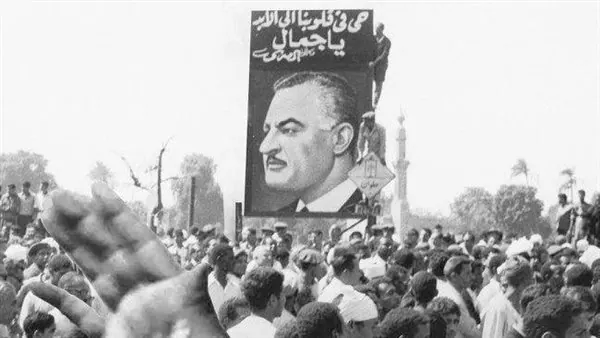
On October 1, 1970, Egypt witnessed a day of unprecedented mourning as the nation bid farewell to President Gamal Abdel Nasser. The funeral procession, which began at the Qubba Palace, was attended by thousands of Egyptians and Arab leaders, all of whom came to pay their respects to a leader who had left an indelible mark on the nation. The procession was marked by an outpouring of grief, with many in attendance overcome with emotion.
The funeral procession was a grand affair, with Arab leaders and dignitaries in attendance. King Hussein of Jordan and Yasser Arafat, the leader of the Palestine Liberation Organization, were among those who came to pay their respects. Even Muammar Gaddafi, the Libyan leader, was overcome with emotion, fainting due to the shock of Nasser's passing. The event was covered extensively by the media, with many describing it as one of the largest and most significant funerals of the modern era.
The body of President Nasser was transferred from his home in Manshiyat Al-Bakri to the Qubba Palace on September 28, 1970, where it was kept until the funeral procession. The transfer was a sign of respect for the leader, who had passed away after a heart attack at the age of 52. In the days leading up to the funeral, the nation was in a state of mourning, with many Egyptians gathering outside the palace to pay their respects.
The funeral procession began with a military salute, as the body of President Nasser was carried on a special vehicle from the Qubba Palace to the Revolutionary Command Center near the Qasr El-Nil Bridge. Along the way, millions of Egyptians lined the streets, chanting slogans and paying their respects to the leader. The procession was accompanied by the sound of sirens and the firing of cannons, a sign of respect for the deceased leader.
As the procession made its way through the streets of Cairo, it was met with an outpouring of grief from the Egyptian people. Many were overcome with emotion, with some attempting to touch the body of the president as it passed by. The procession was also attended by many foreign dignitaries, who came to pay their respects to a leader who had played a significant role in shaping the modern Middle East.
The funeral procession was marked by a series of tributes, including the firing of 21 cannon shots and the recitation of Quranic verses. The event was also marked by a series of eulogies, in which speakers praised the president's leadership and vision. In the aftermath of the funeral, many Egyptians continued to mourn the loss of their leader, with some describing him as a hero and a symbol of Arab nationalism.
The funeral of President Nasser was widely covered in the international media, with many describing it as one of the largest and most significant funerals of the modern era. The event was seen as a testament to the enduring legacy of the president, who had played a significant role in shaping the modern Middle East. Today, President Nasser is remembered as a hero and a symbol of Arab nationalism, and his legacy continues to be felt in Egypt and beyond.
Key points
- The funeral procession was attended by thousands of Egyptians and Arab leaders, all of whom came to pay their respects to President Nasser.