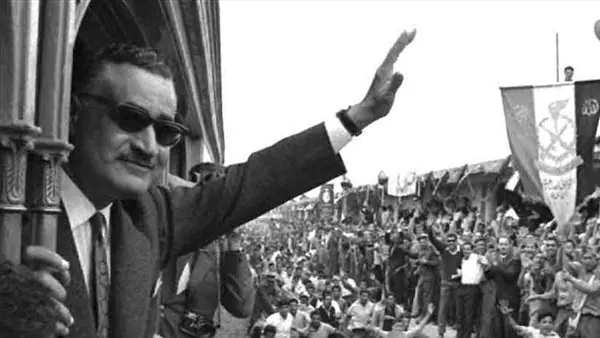
Today, September 28, marks the 56th anniversary of the passing of President Gamal Abdel Nasser, a leader who played a pivotal role in shaping Egypt's history. Nasser, who was 52 years old at the time of his death, led the country through a period of significant change and challenge. Born in 1918 in the city of Alexandria, Nasser was a key figure in the 1952 revolution that overthrew the monarchy and established a republic. He served as President of Egypt from 1956 until his death in 1970.
Nasser's health began to decline in 1958 when he was first diagnosed with diabetes. The condition worsened after the 1967 war, also known as the Six-Day War, which resulted in a significant defeat for Egypt. Despite his health issues, Nasser continued to play an active role in politics, attending meetings and events until his death. In the months leading up to his passing, Nasser was involved in several high-level meetings, including an emergency summit in Amman to address the situation in Jordan.
On September 27, 1970, Nasser attended a summit in Amman, where he met with other Arab leaders to discuss the situation in Jordan. The summit ended on September 27, but Nasser remained in Amman to follow up on the discussions. He returned to Cairo on September 28, where he continued to work on various issues. That evening, he met with his family for the first time in a week, and the next day, he went to the airport to bid farewell to several heads of state.
According to Sami Sharaf, a former aide to Nasser, the President's condition began to deteriorate rapidly on the morning of September 28. Sharaf received a call from Nasser's secretary, Fuad Abdel Hay, who informed him that Nasser was unwell. Sharaf rushed to Nasser's residence, where he found the President surrounded by doctors and medical equipment. Despite their efforts, Nasser's condition continued to decline, and he passed away at 5:00 pm on September 28, 1970.
Nasser's death was met with widespread shock and grief, both in Egypt and across the Arab world. His successor, Anwar El-Sadat, announced his passing on the radio, describing Nasser as "one of the most precious men, the most brave men, and the most selfless men" in Egyptian history. Nasser's legacy continues to be felt in Egypt and beyond, with many regarding him as a champion of Arab nationalism and a symbol of resistance against colonialism.
Throughout his life, Nasser was a prolific writer and thinker, penning several books, including "The Philosophy of the Revolution" and "In the Way of Freedom". He was also a passionate advocate for social justice and human rights, and his presidency was marked by significant efforts to modernize and industrialize Egypt's economy. Nasser's commitment to these causes earned him a reputation as a champion of the common man and a fierce opponent of imperialism.
Today, Nasser remains a revered figure in Egypt, with many regarding him as a national hero. His legacy continues to inspire Egyptians and Arabs around the world, and his presidency is remembered as a time of great change and progress. As Egypt marks the 56th anniversary of his passing, Nasser's memory serves as a reminder of the power of leadership and the enduring impact of one person on the course of history.
Key points
- President Gamal Abdel Nasser passed away on September 28, 1970, at the age of 52.
- Nasser's health began to decline in 1958 when he was first diagnosed with diabetes.
- Nasser's legacy continues to be felt in Egypt and beyond, with many regarding him as a champion of Arab nationalism and a symbol of resistance against colonialism.