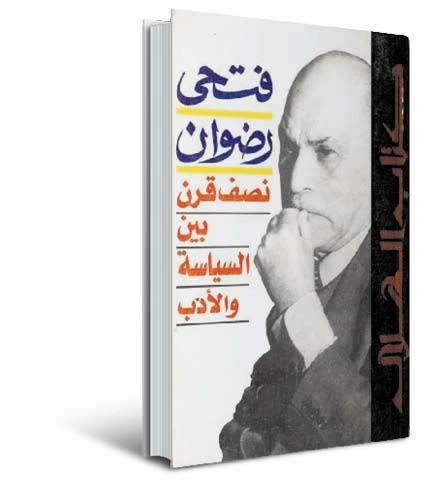
Fathi Radwan, a multifaceted personality, was a writer, politician, and thinker who defied categorization. Born on May 7, 1911, in Minya, his family moved to Cairo when he was young, and he grew up in the historic neighborhood of Sayyida Zainab. This culturally rich environment shaped his thoughts and nationalist sentiments. His mother instilled in him a love for Egypt, introducing him to the works of Mustafa Kamil and Saad Zaghlul. The local mosque and the residence of prominent writers like Taufiq al-Hakim and Ibrahim Abdel Kader Al-Mazeni further fueled his intellectual curiosity.
Radwan's early life was marked by a blend of traditional and modern influences. He attended Al-Azhar and developed his oratory skills through Friday sermons during the turbulent years of the 1919 revolution. At a young age, he demonstrated his writing prowess by becoming the editor-in-chief of his school magazine, tackling bold topics such as Darwin's theory of evolution. His entry into politics began with the establishment of the "Project for a Shilling" aimed at promoting national industry. This activism led to his involvement with the "Egyptian Youth Party," which he co-founded in 1933.
Throughout his life, Radwan remained committed to his ideals, often at great personal cost. He was imprisoned three times during the monarchy for criticizing the king and advocating for political change. His journal, "Al-Liwa' Al-Jadid," founded in 1944, became a platform for his fiery articles that challenged the status quo and helped lay the groundwork for the 1952 revolution. After the revolution, Radwan held significant government positions, including Minister of State and founder of the Ministry of National Guidance, until his resignation in 1958 due to ideological differences with President Gamal Abdel Nasser.
Radwan's legacy extends beyond politics; he was a champion of literature and the arts. He was a vocal supporter of the theater and music, advocating for the work of pioneers like Sayed Darwish and the modernist projects of Umm Kulthum and Mohamed Abdel Wahab. His commitment to free expression led to further conflicts with the authorities, culminating in his arrest in 1981 at the age of 75, alongside other prominent figures. Despite this, Radwan continued to speak out against injustice until his passing on October 2, 1988.
In his memoirs, particularly "72 Months with Nasser," Radwan provided a candid account of his experiences and observations during his time with the former president. He praised Nasser's vision while also critiquing his policies, showcasing his unwavering commitment to free speech and accountability. Radwan's resilience in the face of adversity earned him respect from both his peers and adversaries. His story serves as a testament to the power of ideas and the enduring impact of one individual on a nation's intellectual and political trajectory.
Radwan's contributions to Egyptian culture and politics are still celebrated today. His life's work continues to inspire new generations of thinkers, writers, and activists. As Egypt moves forward, it grapples with the same issues of identity, governance, and cultural expression that Radwan confronted throughout his life. His legacy serves as a reminder of the importance of critical thinking, artistic freedom, and political engagement.
As the nation reflects on Radwan's life and achievements, it is clear that his influence will endure. His story is a powerful example of how one person can shape the course of history through their ideas and actions. Today, Egypt honors Radwan's memory by continuing the conversation he started – a conversation about the future of the nation, its culture, and its people.
Key points
- Fathi Radwan was a pioneering Egyptian thinker, writer, and politician who played a significant role in shaping the country's cultural and intellectual landscape.
- Radwan's commitment to free expression and his critiques of those in power led to multiple imprisonments and periods of exile.
- His legacy continues to inspire new generations of thinkers, writers, and activists in Egypt and beyond.