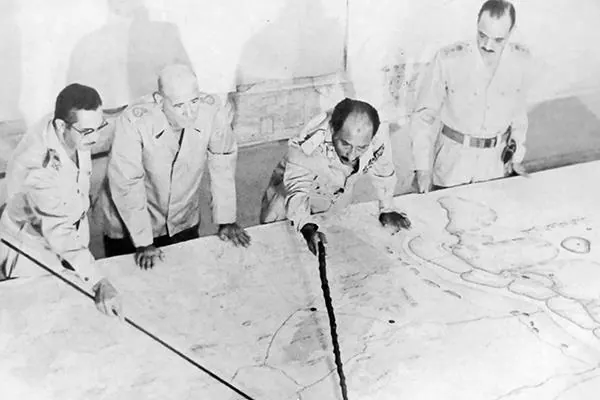
Egypt is marking the 53rd anniversary of its 1973 war victory over Israel, a conflict that saw the Egyptian military cross the Suez Canal and breach Israel's Bar-Lev Line defenses. The war, which began on October 6, 1973, was a significant turning point in the country's history, demonstrating the military's ability to overcome seemingly insurmountable obstacles. The Egyptian military's victory was the result of careful planning, precise execution, and the bravery of its soldiers.
The war was not just a simple crossing of a waterway, but a complex military operation that involved breaching Israel's defenses, which had been built after the 1967 war. The Israeli defenses included a sand barrier, fortifications, and a sophisticated early warning system. To overcome these defenses, the Egyptian military developed a comprehensive plan that involved a coordinated effort between its various branches. The plan, devised by President Anwar El-Sadat, involved a surprise attack on Israel's defenses, followed by a series of coordinated military operations.
A key element of the Egyptian plan was the use of water pumps to breach the sand barrier, a tactic that allowed the military to overcome what seemed like an insurmountable obstacle. The use of these pumps, developed by Egyptian engineer Major Baki Zaki Youssef, enabled the military to create breaches in the sand barrier, allowing troops and equipment to cross into the Sinai Peninsula. This innovative solution demonstrated the Egyptian military's ability to think creatively and find solutions to complex problems.
The Egyptian military's ability to establish a foothold on the east bank of the Suez Canal was only the beginning of the operation. To consolidate their gains, the military had to ensure a steady flow of troops and equipment, which required the construction of bridges and the use of ferries. The engineers played a crucial role in this process, working under intense Israeli fire to establish a secure bridgehead. The Egyptian military's success in this endeavor was a testament to its ability to adapt to changing circumstances and overcome unexpected challenges.
The 1973 war was not just a military victory for Egypt, but also a significant psychological and political boost. The conflict marked a turning point in the country's relations with Israel and the international community, demonstrating Egypt's determination to assert its sovereignty and protect its territorial integrity. The war also highlighted the importance of careful planning and coordination in military operations, as well as the bravery and sacrifice of Egyptian soldiers.
The United States played a significant role in the conflict, providing military aid to Israel in the aftermath of the war. The US airlift of military supplies to Israel, which began on October 14, 1973, helped to shift the balance of power in the conflict. However, the Egyptian military's gains on the battlefield were not solely due to external factors, but also the result of its own planning, training, and determination. The war marked a significant milestone in the country's history, demonstrating its ability to overcome adversity and assert its independence.
Today, Egypt's 1973 war victory is remembered as a testament to the country's military prowess and its determination to protect its sovereignty. The conflict serves as a reminder of the importance of careful planning, coordination, and bravery in the face of adversity. As Egypt celebrates the 53rd anniversary of its victory, it honors the memory of its soldiers who fought and died in the conflict, and reaffirms its commitment to defending its territorial integrity and national interests.
Key points
- Egyptian military's innovative use of water pumps to breach Israel's sand barrier
- US military aid to Israel during the 1973 war
- Egypt's 1973 war victory marked a significant turning point in its history, demonstrating its military prowess and determination to assert its sovereignty.