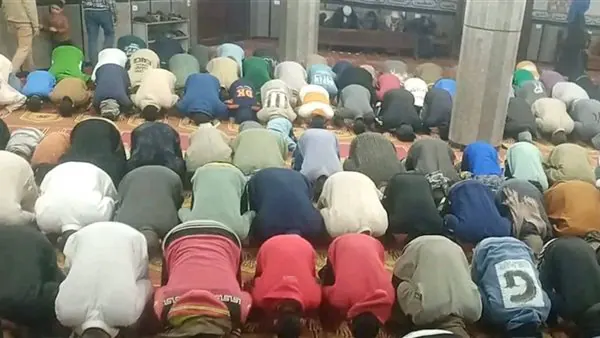
In Islamic tradition, prayer is a fundamental act of worship that plays a crucial role in a Muslim's life. The Quran emphasizes the importance of prayer, stating that it prevents one from committing evil deeds. According to Islamic scholars, the term "prayer" in the Quran can refer to either the recitation of the Quran during prayer or the act of prayer itself. Muslims believe that prayer helps to establish a connection with Allah and promotes a virtuous lifestyle.
The Azan, or call to prayer, is an essential aspect of Islamic worship, serving as a reminder for Muslims to perform their daily prayers. It is considered a collective duty for men, and if some men fulfill this duty, it is no longer obligatory for others. In Egypt, the Azan is broadcast from mosques five times a day, calling Muslims to perform their prayers. The Egyptian government, through the Ministry of Endowments, oversees the Azan and prayer times across the country.
On Monday, September 28, 2026, the prayer times in Cairo are as follows: Fajr (dawn) at 5:20 am, Dhuhr (noon) at 12:46 pm, Asr (afternoon) at 4:10 pm, Maghrib (sunset) at 6:44 pm, and Isha (night) at 8:01 pm. In Alexandria, the prayer times are slightly different, with Fajr at 5:24 am, Dhuhr at 12:51 pm, Asr at 4:15 pm, Maghrib at 6:49 pm, and Isha at 8:07 pm.
In other Egyptian cities, the prayer times vary slightly due to differences in longitude and latitude. In Aswan, Fajr is at 5:17 am, Dhuhr at 12:39 pm, Asr at 4:04 pm, Maghrib at 6:39 pm, and Isha at 7:52 pm. In Ismailia, Fajr is at 5:16 am, Dhuhr at 12:42 pm, Asr at 4:06 pm, Maghrib at 6:40 pm, and Isha at 7:58 pm.
According to Islamic tradition, performing prayers in congregation has numerous benefits. The Prophet Muhammad (peace be upon him) is reported to have said that whoever prays for 40 days in congregation, attending the first Takbir (Allahu Akbar), will be granted two freedoms: from the fire and from hypocrisy. This highlights the significance of collective prayer in promoting unity and spiritual growth among Muslims.
The importance of prayer is further emphasized in various Hadiths (Prophetic traditions). For instance, the Prophet Muhammad (peace be upon him) expressed his desire to order people to perform prayer in congregation, and he encouraged Muslims to hasten to perform the early morning prayer (Fajr) and the night prayer (Isha). These statements underscore the value of prayer in a Muslim's life and the need to prioritize it.
In conclusion, prayer times play a vital role in the daily lives of Muslims in Egypt and around the world. By following the Azan schedule and performing their prayers in congregation, Muslims can strengthen their connection with Allah and foster a sense of community. The prayer times for Monday, September 28, 2026, are available for various cities in Egypt, including Cairo, Alexandria, Aswan, and Ismailia.
Key points
- Prayer times in Cairo on September 28, 2026, are Fajr at 5:20 am, Dhuhr at 12:46 pm, Asr at 4:10 pm, Maghrib at 6:44 pm, and Isha at 8:01 pm.
- The Azan, or call to prayer, is an essential aspect of Islamic worship, serving as a reminder for Muslims to perform their daily prayers.
- Performing prayers in congregation has numerous benefits, including promoting unity and spiritual growth among Muslims.