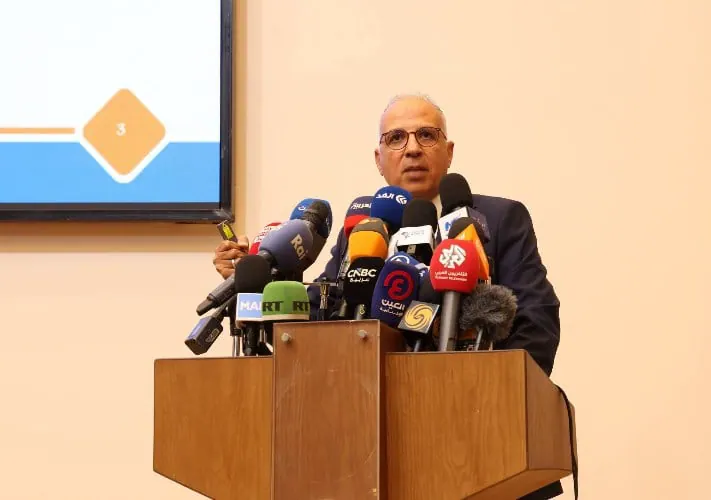
Egypt has taken a firm stance on the Grand Ethiopian Renaissance Dam and the Nile Basin Cooperative Framework Agreement. The country's Minister of Water Resources and Irrigation, Hani Suwelam, recently briefed international media on Egypt's water management policies and its position on the dam. Suwelam emphasized that Egypt's water resources are limited, with over 98% of its renewable water resources coming from outside its borders.
Suwelam highlighted the challenges facing Egypt's water sector, including a limited share of the Nile River's water. He stated that Egypt's renewable water resources amount to around 56.8 billion cubic meters per year, while its water needs are approximately 123 billion cubic meters per year. The minister also noted that Egypt is taking steps to address these challenges, including water reuse and desalination.
The minister discussed Egypt's cooperation with Nile Basin countries, citing several projects aimed at supporting development in the region. These projects include drilling wells, constructing water treatment plants, and establishing early warning systems for floods and droughts. Suwelam also mentioned a new funding mechanism to support development projects in Nile Basin countries.
Suwelam provided an overview of the water resources in the Nile Basin, stating that the basin receives around 2,000 billion cubic meters of rainfall per year. However, only around 84 billion cubic meters of this water continues to flow through the Nile River to Sudan and Egypt. He disputed claims that Egypt receives a disproportionate share of the Nile's water, citing the country's limited water resources.
The minister discussed the differences between Egypt's and Ethiopia's water resources, highlighting that Ethiopia receives significant rainfall and has a substantial amount of groundwater. He noted that Ethiopia's water resources are estimated to be around 122 billion cubic meters per year, while Egypt's water resources are largely dependent on the Nile River.
Suwelam touched on the issue of the Grand Renaissance Dam, which has been a point of contention between Egypt, Sudan, and Ethiopia. He stated that Egypt is closely monitoring the situation and is committed to finding a solution that works for all parties. The minister also emphasized the importance of cooperation and dialogue in resolving the issue.
Egypt has reiterated its commitment to supporting development in Nile Basin countries, citing several projects aimed at improving water management and infrastructure in the region. The country's stance on the Grand Ethiopian Renaissance Dam and the Nile Basin Cooperative Framework Agreement reflects its concerns about the impact of these issues on its water security and the region's stability.
Key points
- Egypt has outlined its stance on the Grand Ethiopian Renaissance Dam and the Nile Basin Cooperative Framework Agreement.
- The country's water resources are limited, with over 98% of its renewable water resources coming from outside its borders.
- Egypt is committed to supporting development in Nile Basin countries through various projects aimed at improving water management and infrastructure.