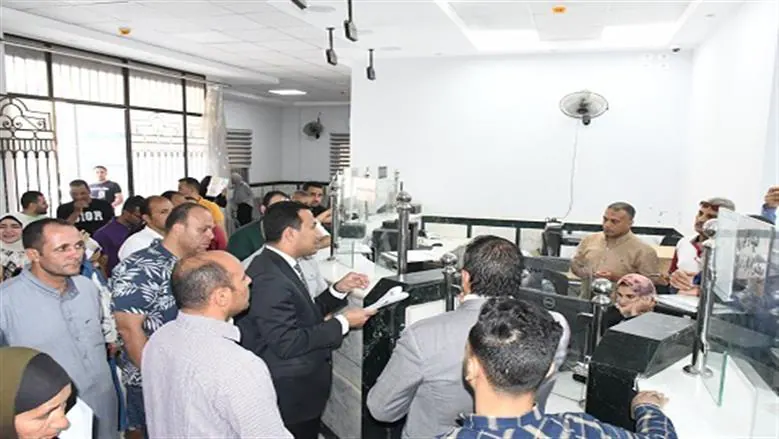
Egyptian technological centers affiliated with governorate administrations have announced official procedures and steps for resolving amnesty applications on construction violations outside urban areas and within approved blocks and scattered plots. This process follows the provisions of Law No. 187 of 2023 and its executive regulations. The centers outlined a six-stage process for citizens to regularize their properties.
The process begins with submitting an application, where citizens visit the specialized technological center or use the electronic system to apply for amnesty, attaching required documents and GPS coordinates of the property. The coordinates are then electronically checked by matching the building's coordinates on the electronic system to ensure it is within approved blocks or scattered plots, a prerequisite for accepting the application.
After verifying the coordinates, the file is referred to a technical committee for study, examination, and resolution. The committee's review is a critical step in determining the eligibility of the property for amnesty. This stage involves a thorough assessment of the property's status and compliance with relevant regulations.
Once the technical committee has reviewed the file, it is transferred to the Licensing Administration for on-site inspection and review of technical conditions. This step ensures that the property meets the necessary requirements for regularization. Citizens are required to comply with all regulations and provide any additional documentation or information requested.
The next step involves citizens fulfilling their financial obligations, including paying prescribed fees, and addressing any outstanding remarks or required documents. This stage is crucial in finalizing the amnesty process. Upon completion of these requirements, citizens can proceed to the final stage.
The final stage involves receiving a Form 8 amnesty certificate, which formally regularizes the property's status. This certificate is issued after the amnesty has been approved, providing citizens with official documentation of their property's regularization. The streamlined process aims to simplify procedures for citizens and provide clarity on the requirements for amnesty.
Technological centers emphasized that the acceptance of amnesty applications is primarily contingent upon verifying that the building is within approved blocks or scattered plots on the electronic system or meets the conditions stipulated in Law No. 187 of 2023. The Egyptian government has reiterated its commitment to facilitating procedures and providing clear guidelines for citizens to regularize their properties.
Key points
- The Egyptian government has outlined a six-stage process for citizens to regularize unauthorized construction outside urban areas.
- The process involves submitting an application, verifying GPS coordinates, technical committee review, on-site inspection, fulfilling financial obligations, and receiving a Form 8 amnesty certificate.
- The acceptance of amnesty applications depends on verifying that the building is within approved blocks or scattered plots or meets specific conditions stipulated in Law No. 187 of 2023.