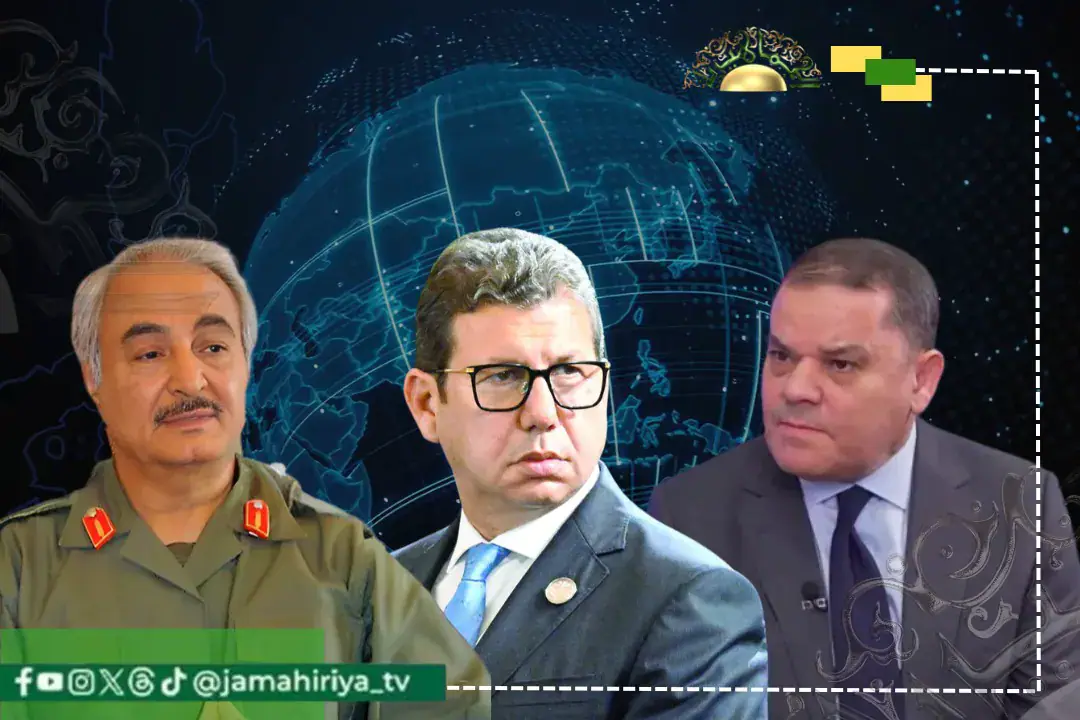
Egyptian General Hassan Rashad, head of the country's General Intelligence Service, recently met with Libyan Prime Minister Abdulhamid al-Dbeibah in Tripoli. The meeting came as Egypt seeks to navigate the complexities of Libya's ongoing political crisis and protect its interests in the region. According to sources, the two officials discussed cooperation on security and economic issues, as well as ways to support Libya's stalled political process. The talks also touched on Egypt's concerns over a maritime agreement between Libya and Turkey signed in 2019.
The maritime agreement has been a point of contention between Egypt and Libya, with Egypt rejecting the deal as an infringement on its maritime rights. The agreement was recently ratified by Libya's parliament, prompting Egypt to express its disapproval. Egyptian Foreign Minister Badr Abdelatty visited Tripoli earlier this month to discuss the issue with al-Dbeibah, emphasizing the need for a negotiated solution that takes into account Egyptian concerns. Al-Dbeibah reportedly agreed to continue dialogue and establish technical committees to address the dispute.
Egypt's moves in Libya are seen as an effort to maintain a balance between rival factions in the country. General Rashad's meeting with al-Dbeibah followed a visit to Cairo by Khalifa Haftar, a key military leader in eastern Libya. Egypt has traditionally maintained close ties with Haftar's camp, but also seeks to engage with al-Dbeibah's government in the west. By meeting with both sides, Egypt aims to protect its interests and maintain influence in the country.
The Libyan crisis has been marked by a deepening divide between eastern and western regions, with rival governments and parliaments vying for power. Egypt has significant economic and security interests in Libya, particularly in the energy sector. A stable and secure Libya is seen as crucial to Egypt's national interests, and Cairo is keen to prevent further instability in the region.
Al-Dbeibah's government has faced challenges in asserting its authority, particularly in the east, where Haftar's forces hold sway. The recent ratification of the maritime agreement with Turkey has added to tensions between the rival factions. Egypt's efforts to engage with both sides are seen as an attempt to prevent further escalation and promote a negotiated solution to the crisis.
The talks between General Rashad and al-Dbeibah also highlighted the need for cooperation on security issues, including border control and counter-terrorism. Egypt has been concerned about the spread of extremist groups in Libya, which could pose a threat to its own national security. By working with both sides, Egypt aims to promote stability and security in the region.
The outcome of Egypt's efforts remains uncertain, with many challenges still to be overcome. However, by engaging with both rival factions, Egypt is seeking to protect its interests and promote a peaceful resolution to the Libyan crisis. The international community is watching closely, as a stable Libya is seen as crucial to regional security and stability.
Key points
- Egypt seeks to balance relations with rival factions in Libya amid tensions over maritime agreement with Turkey.