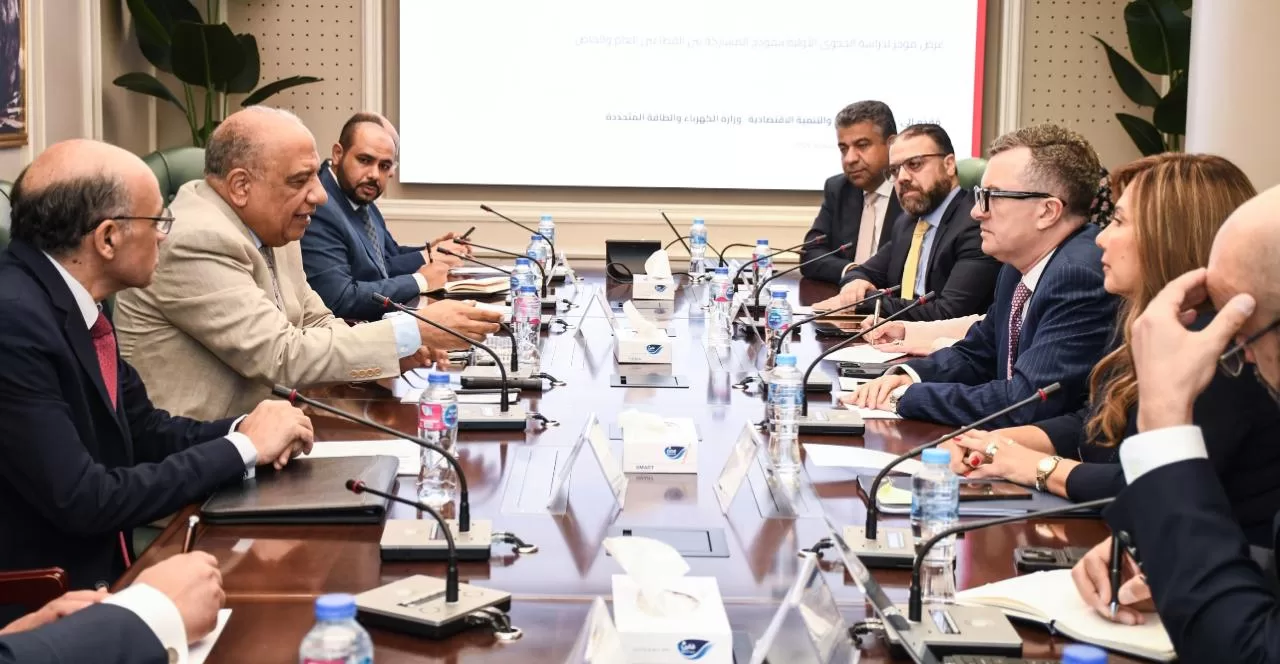
Egyptian Minister of Electricity and Renewable Energy, Dr. Mahmoud Essam, and Minister of Planning and Economic Development, Dr. Ahmed Rustam, met to discuss a plan for utilizing natural resources and raw materials to maximize returns from available assets. The meeting, attended by several high-ranking officials, focused on leveraging the infrastructure of power generation plants to establish seawater desalination plants and create necessary economic entities in collaboration with the private sector.
The ministers reviewed the joint plan and coordination between their ministries, including preliminary economic and feasibility studies for utilizing power plant infrastructure in line with Egypt's sustainable development plan. They discussed the impact of available infrastructure on reducing final costs and operating expenses. The meeting also touched on partnership models with the private sector and financing mechanisms, with several company proposals and used technologies presented.
The discussion included the creation of economic entities for investing in salt and element extraction, as well as projects for extracting critical and rare earth elements from associated minerals. This would be achieved through cooperation and integration with concerned authorities. The meeting also covered ongoing projects in the electricity sector, provision of development financing, and technical support, as well as the role of international partners in providing technical assistance and financing.
Dr. Mahmoud Essam emphasized the continuation of efforts to maximize returns from available assets, particularly power plants near the Red and Mediterranean seas. He highlighted the importance of investing in power plant infrastructure for seawater desalination and the expansion of energy storage facilities to optimize returns from renewable energies and reduce fossil fuel consumption during peak hours.
Dr. Essam also discussed plans for extracting rare earth elements and materials, outlining the state's strategy to increase economic returns and the significance of these resources. He mentioned cooperation with the Ministry of Planning to provide necessary support and required investments. Dr. Ahmed Rustam stressed that infrastructure investment is a key driver of sustainable economic growth and a prerequisite for developing all productive sectors.
Dr. Rustam highlighted the priority given to electricity, renewable, and clean energy projects in the state's investment plan, as they are essential for attracting investments and establishing national industries. He emphasized the importance of collaboration with companies such as "NA Capital" and "NA Consultants" and the National Investment Bank to provide economic studies, feasibility studies, and financing structures in partnership with international financial institutions and the private sector.
The cooperation aims to establish a modern energy network capable of supporting urban and industrial expansion, as well as a transition towards a greener and more resilient economy. The Egyptian government is working to enhance partnerships between the public and private sectors in the energy sector, ensuring the optimal utilization of resources and infrastructure to drive sustainable development.
Key points
- Egypt's government is working to maximize returns from available assets, particularly power plants, for seawater desalination and salt extraction.
- The plan involves collaboration with the private sector and international partners to provide financing and technical support.
- The project aims to establish a modern energy network and drive sustainable economic growth.