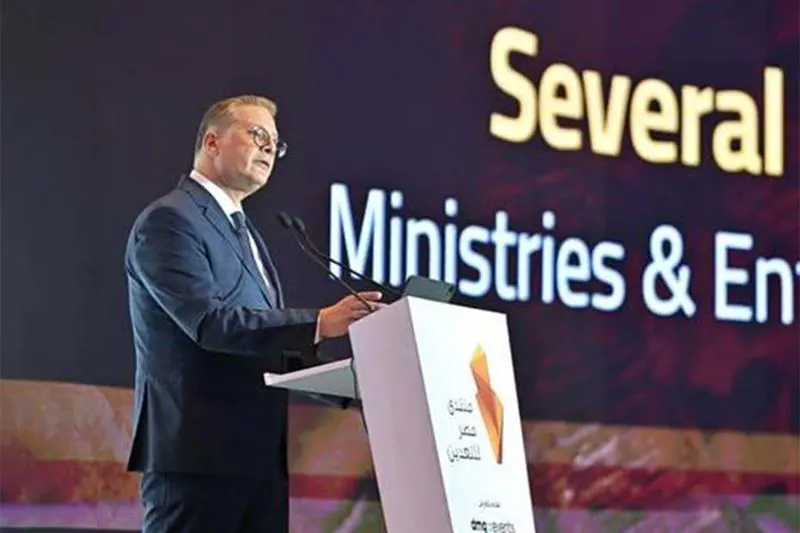
The Egypt Mining Forum 2026, held on 28-29 September in the New Capital under the patronage of Egyptian President Abdel-Fattah El-Sisi, brought together Egyptian officials, international financial institutions, mining companies, and foreign partners. The forum aimed to develop integrated value chains for minerals, expand local processing, and attract investment into mining and related industries. Egypt is seeking to transform its mining sector from a largely extraction-focused activity into a source of higher-value industrial production.
Petroleum and Mineral Resources Minister Karim Badawi said Egypt is targeting an increase in mining’s contribution to GDP to around six percent, from less than one percent currently. The government’s approach is to move beyond exploration and extraction towards processing, manufacturing, and linking mineral products to domestic and international markets. Badawi stressed that achieving higher economic returns from mineral resources requires cooperation between governments, private companies, financial institutions, and firms across the mining value chain.
Badawi met with Namrata Thapar, the World Bank Group’s global director for metals and mining, to discuss providing financing for mining projects, developing human resources and technical expertise, and supporting projects that add value to Egypt’s mineral resources. The two sides discussed a minerals roadmap being prepared to assess Egypt’s geological potential and identify the requirements for developing and exploiting its mineral resources. The World Bank expressed interest in providing initial financing to support Egypt’s mining sector, with capacity building identified as an initial area of cooperation.
An MoU was signed by the Egyptian Ministry of Industry and Finnish mining technology company Metso to provide technical and operational support for mineral processing and extraction projects. The agreement covers laboratory research and analysis, feasibility studies, technical assessments, engineering consultancy, and the provision of field experts to support local companies and transfer expertise. Industry Minister Khaled Hashem said the agreement is intended to support the development of mining industries, attract new investment, and increase value added.
Egypt is prioritizing phosphate, with the goal of reducing reliance on exports of raw phosphate in favour of higher-value products such as phosphoric acid and phosphate fertilizers. Manganese is another focus, with the government working with two companies this year to process the ore locally into higher-concentration material. This move is intended to support steel and heavy industries, reduce imports of refractory materials and silicon-manganese alloys, and create additional export opportunities.
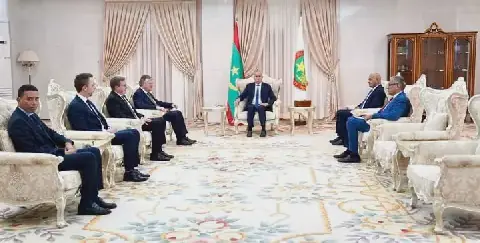
The forum provided a platform for Egypt to expand mining cooperation with foreign partners, including the Democratic Republic of Congo and Saudi Arabia. Badawi met with DRC Mines Minister Louis Watum to discuss cooperation in mining, infrastructure, energy, and engineering services. Egypt also held talks with Saudi Deputy Minister of Industry and Mineral Resources for Mining Affairs Khalid Al-Mudaifer on mining investment, training, and the exchange of expertise.
Industry Minister Khaled Hashem said Egypt’s industrial strategy places key minerals among strategic industries and seeks to align mining and industrial policies. Hashem called for greater integration among African countries in mining and mineral-based manufacturing, noting that intra-African trade stands at around $220 billion despite the continent’s substantial mineral resources and large consumer markets.
Key points
- Egypt targets 5.2%-5.4% real GDP growth in FY27/2028.
- Egypt is the world's 3rd-largest holder of phosphate reserves.
- The government aims to increase mining's contribution to GDP to around six percent.